

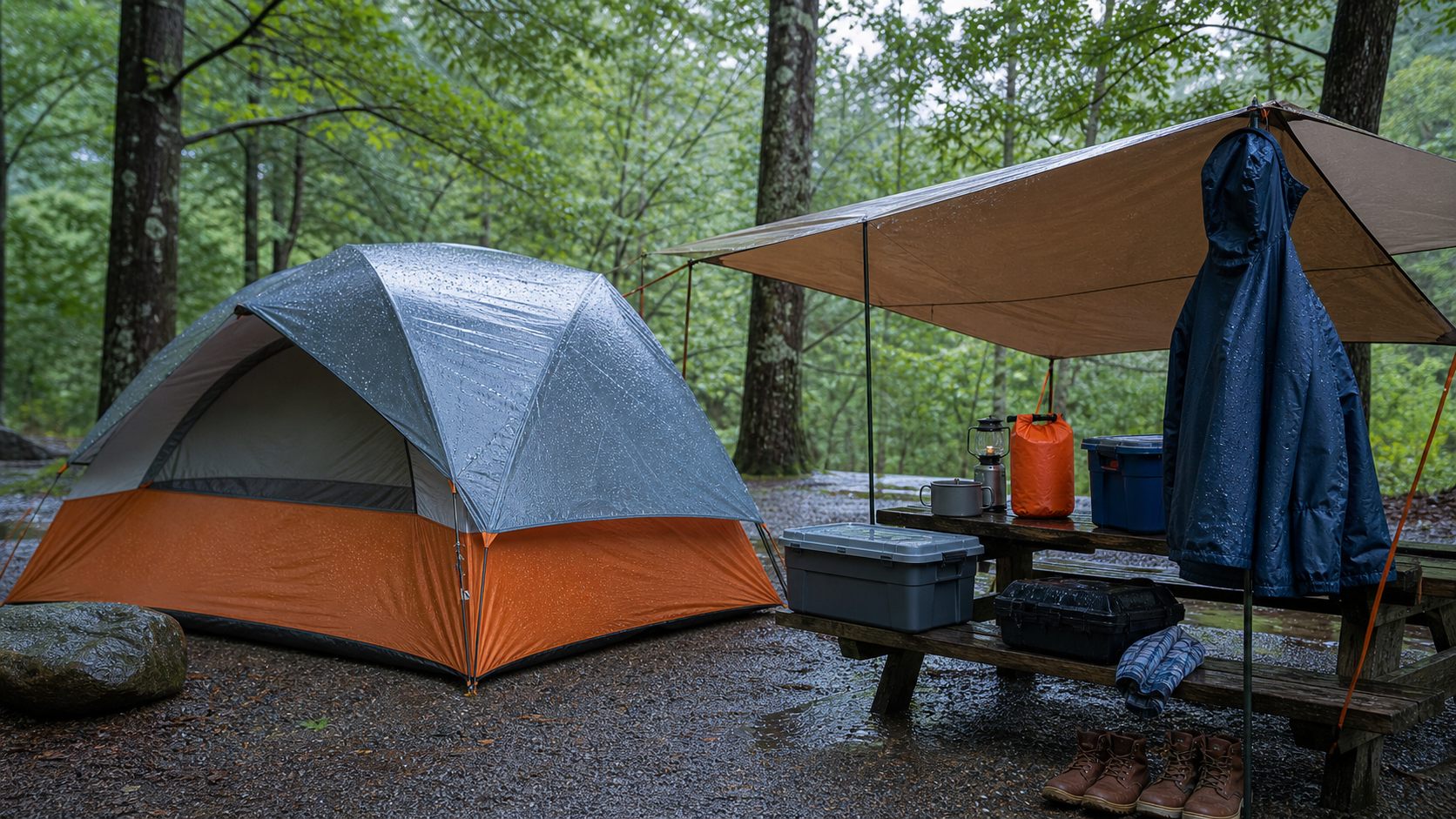
Camping in rain works best when you plan for water before the first drop hits the tent. Pack rain layers, protect your sleep system, pitch on ground that drains, keep a dry clothing reserve, and have a clear shelter or exit plan for lightning, flooding or cold rain.
This checklist is written for US campers planning developed campgrounds, car camping and road-accessible weekend trips. It is research-only, uses sourced safety claims, includes no affiliate links and does not claim that Trail Gear Review personally tested any tent, tarp, jacket or campsite setup.
Quick Answer: The Rain Camping Checklist
Start with these checks before you leave:
- Check the forecast, alerts and campground notices for the exact destination.
- Pack a rain shell, extra clothing, headlamp, repair kit, water, extra food and emergency shelter items.
- Keep sleeping bag, sleep clothes, electronics and critical layers in dry bags or a pack liner.
- Bring a tent footprint or groundsheet that fits under the tent floor and can be folded fully under the tent.
- Add a separate tarp or shelter for the picnic table, cooking staging and wet-gear handling.
- Pitch on level ground that is not low, sunken or near a ravine that could flood.
- Look up for dead branches before committing to a site.
- Tighten and guy out the rainfly before unloading everything else.
- Keep one dry clothing set sealed until bedtime.
- Do not treat a tent or tarp as lightning shelter.
- Do not walk or drive into floodwater.
- Be ready to leave if rain turns into lightning, flooding, road closures, hypothermia risk or an unmanageable wet camp.
For the broader non-rain packing list, pair this article with Trail Gear Review’s weekend camping checklist for beginners.
Decide Whether the Trip Still Makes Sense
Rain by itself is often manageable. Thunderstorms, flooding, cold rain, closed roads and poor campsite drainage are different. Before you pack the car, check official weather information, campground alerts and local road conditions. Trail Gear Review’s guide to camping apps for planning, weather and offline maps can help with the app side of that workflow, but current official weather and land-manager information should drive the final decision.
Use these go/no-go questions:
- Is lightning in the forecast during arrival, setup, hiking or sleep hours?
- Is the campground or access road under a flood, flash flood or severe weather alert?
- Will the site be reachable and drain well after sustained rain?
- Are overnight temperatures low enough that wet clothing could become a hypothermia risk?
- Is there a sturdy building, hard-topped vehicle or safe exit route if a thunderstorm reaches camp?
- Can you keep sleeping insulation, dry clothes and essential electronics dry for the full trip?
- Are you camping solo without a reliable check-in and bailout plan?
The National Weather Service is clear that a tent is not lightning shelter. Its camping guidance tells campers to shelter in a sturdy building or a hard-topped vehicle with the windows up when lightning threatens. If no such shelter or exit exists, do not rely on a tarp, picnic shelter or tent as the backup.
Floodwater also deserves a hard stop. NWS flood safety guidance says it is never safe to walk or drive into floodwaters. If campground roads, low-water crossings, washes or access roads are flooded, turn around.
Cold rain can create a health problem even when the forecast does not look wintry. CDC hypothermia guidance says hypothermia can occur even above 40 F if someone is chilled by rain, sweat or cold water. If the plan depends on staying wet for hours with no dry clothing reserve, no warm sleep system and no exit option, change the trip.
Solo campers should be especially conservative. The solo camping safety checklist is a useful companion for check-ins, route sharing and exit thresholds.
Pack the Rain Gear That Keeps Systems Dry
The goal is not just to keep your shoulders dry. In a rainy camp, you are protecting systems: sleep, clothing, food, lights, navigation, medicine and morale.
Start with the National Park Service Ten Essentials framework. NPS includes extra clothing such as a jacket, hat, gloves, rain shell and other layers; it also lists illumination, repair tools, extra food, hydration and emergency shelter. For rain camping, those categories translate into a practical packing layer:
- rain jacket or shell
- rain pants or quick-drying lower-body layer if sustained rain is likely
- brimmed rain hat or cap under the hood
- wool or synthetic base layers and socks
- sealed dry sleep clothes
- extra socks in a dry bag
- headlamp plus extra batteries or charging plan
- repair tape, spare guyline, stakes and basic multi-tool
- tent footprint or correctly sized groundsheet
- tarp, poles/lines or a freestanding shelter for the kitchen and wet-gear area
- pack liner, dry bags, waterproof electronics pouch or lidded bins
- towel or cloth for wiping tent floor, hands and gear
- no-cook or low-cook meal option if weather makes stove setup unsafe
REI rain-backpacking guidance recommends avoiding cotton next-to-skin layers in wet conditions and using wool, nylon or polyester instead. It also recommends preserving a dry set of camp clothes in a dry bag until you are inside the tent. The same logic works for car camping: one dry sleep layer is not optional when the night may be cool and wet.
Do not let dry storage become an afterthought. A plastic tote, pack liner or dry bag is what keeps a small leak from becoming a soaked sleeping bag. Put the sleeping bag, sleep clothes, phone, power bank, headlamp, medications and paper backups in the first dry zone, not under a pile of wet jackets.
Choose a Campsite That Drains
The best rain gear cannot fix a bad campsite. NPS campsite guidance says campers should consider hazards such as flash flooding, lightning, wind and dead branches. It also says low and sunken tent spots can become extremely wet when it rains.
When you arrive, walk the site before unloading:
- Choose level ground that is not the lowest point in the site.
- Avoid depressions, tire ruts, drainage channels and the bottom of a slope.
- Stay away from ravines or washes that could flood.
- Look up for dead branches or damaged trees.
- Keep distance between the tent, cooking area and eating area.
- Keep tent lines out of the main walking path.
- Make camp before dark if possible so you can see drainage, branches and trip hazards.
Use existing durable surfaces rather than expanding the campsite. NPS Leave No Trace guidance says durable surfaces include maintained trails, designated campsites, rock, gravel, sand, dry grasses or snow. It also tells visitors not to dig trenches or build structures. That means the answer to a wet tent site is to move to better legal ground, not to dig a moat around the tent.
Rain also affects water-impact choices. NPS Leave No Trace guidance says to protect riparian areas by camping at least 200 feet from lakes and streams. In a developed campground, follow the assigned site boundaries and posted rules; in dispersed settings, use the land manager’s current camping rules and the Leave No Trace camping checklist as a low-impact baseline.
Set Up the Tent and Tarp Before Everything Gets Wet
In rain, the order of setup matters. Shelter comes before camp decoration, chairs, games or unpacked bins.
Use this setup order:
- Park or stage gear so dry bins stay closed.
- Put on rain layers before unloading.
- Identify the tent spot and tarp area.
- Lay the footprint or groundsheet only where the tent will sit.
- Fold any extra footprint material fully under the tent so it does not collect water.
- Pitch the tent and rainfly first.
- Stake and guy out the fly so fabric is taut.
- Open protected vents if the shelter design allows it.
- Put the tarp or dining shelter over the table or gear-staging area.
- Move sleeping gear into the tent only after the rainfly is secure.
NPS tent setup guidance says a groundcloth or waterproof tarp can work under a tent, but extra tarp should be folded under because exposed edges can collect water instead of repelling it. That small detail matters in steady rain.
REI rain-camping guidance recommends tightening and guying out the rainfly before settling in, orienting tent doors away from wind and using vents to reduce condensation when they can be opened without letting rain in. Treat ventilation as part of staying dry. A sealed tent can still feel wet inside if condensation builds up.
If you use a tarp, think of it as the wet-room, not the bedroom. Use it for shoes, rain jackets, cooking staging where legal and safe, and sorting wet gear. Keep the sleeping tent for dry clothes, sleeping pads and sleeping bags.
Keep Clothing, Sleep Gear and Food Dry
A rainy camp needs wet and dry zones. Without them, one soaked jacket can spread moisture through the whole shelter.
Use a simple zone system:
- Wet zone: boots, rain shell, wet towel, outer tarp area.
- Damp zone: vestibule or covered bin for items that may be used again soon.
- Dry zone: sealed sleep clothes, sleeping bag, electronics, medication, headlamp and next-day base layer.
- Food zone: lidded storage that follows campground food-storage and wildlife rules.
Do not open the dry sleep bag every time you need a snack or charger. Put the most important dry items in one clearly marked bag or bin, and leave it closed until needed.
At bedtime, change out of damp clothing before getting into the sleeping bag. CDC lists hypothermia warning signs that can include shivering, exhaustion, confusion, fumbling hands, memory loss, slurred speech and drowsiness. This article is not medical advice, but those signs should end the normal camping routine and trigger warming, shelter and medical decision-making based on the situation.
Food also needs rain management. Keep packaging from soaking, keep trash controlled and keep food storage aligned with the campground’s wildlife rules. Wet weather is not a reason to leave food, wrappers or scented items scattered under a tarp.
Cook and Move Around Camp Without Creating New Risks
Rain makes campers tempted to cook in the easiest dry place. Do not turn the sleeping tent into a kitchen.
The U.S. Consumer Product Safety Commission warns that portable camping heaters, lanterns or stoves used inside tents, campers or vehicles can cause carbon monoxide poisoning. It also says not to use portable heaters or lanterns while sleeping in enclosed areas such as tents, campers and vehicles. For a rainy trip, that means your kitchen backup should be a legal, ventilated, stable outdoor setup or a no-cook meal plan, not a stove inside the tent.
Use these rain-cooking rules:
- Follow the stove manufacturer’s instructions and campground rules.
- Keep flame and fuel away from tent fabric, tarps, dry leaves and closed shelters.
- Use a stable surface where the stove cannot tip.
- Keep children, pets and wet loose clothing away from flame.
- Choose no-cook meals if wind, rain or rules make stove use unsafe.
- Never use a stove, heater, lantern or charcoal device inside the sleeping tent.
Movement around camp also changes in rain. Mud, slick roots, wet picnic tables and dark guy lines can cause falls. Keep a headlamp accessible, route guy lines away from high-traffic areas where possible, and put boots where they are reachable without dragging mud through the dry zone.
If water starts moving across the site, treat it seriously. Do not walk into fast-moving water to retrieve gear. Do not drive through flooded campground roads. Gear can wait; people cannot.
Overnight Rain Routine
Before you sleep, do a final five-minute rain check:
- Rainfly taut and still staked.
- Vents open only where rain cannot blow in.
- Footprint edges tucked under the tent.
- Dry sleep clothes still dry.
- Boots and rain shell staged for a quick exit.
- Headlamp within reach.
- Phone or weather radio accessible.
- Food, trash and scented items stored by local rules.
- Tarp lines and tent stakes visible enough to avoid tripping.
- Exit plan clear if thunder, flooding or a health concern develops overnight.
If thunder starts, move to the planned safe shelter. If water starts pooling under or around the tent, move before the site becomes harder to manage. If someone is cold, wet, confused, unusually exhausted or shivering hard, stop treating the night as routine camping and switch to safety decisions.
Final Rain Camping Packing Checklist
Use this as the rain-specific layer on top of your normal camping checklist.
Forecast and Decision Tools
- Weather.gov forecast or local official forecast.
- Campground alerts and reservation notes.
- Flood, thunderstorm and road-condition checks.
- Offline map or saved route.
- Shared trip plan and return time.
- Bailout location, vehicle access or sturdy shelter plan.
Shelter and Site Setup
- Tent with rainfly.
- Footprint or groundsheet sized to tuck under the tent.
- Stakes, guylines and tensioners.
- Extra cord.
- Tarp, poles, clips or freestanding shelter.
- Small towel or cloth for wiping water.
- Repair tape or patch kit.
- Ground mat for the tent entry where allowed.
Clothing
- Rain shell.
- Rain pants or quick-drying pants when sustained rain is likely.
- Wool or synthetic base layers.
- Warm layer for cool wet evenings.
- Extra socks.
- Dry sleep clothes sealed separately.
- Hat with brim or rain hat.
- Camp shoes or boots with traction.
Dry Storage
- Pack liner, dry bags or lidded bins.
- Waterproof pouch or bag for phone and paper backups.
- Separate bag for wet clothes.
- Sealed storage for medications and first-aid items.
- Trash bags for wet waste and muddy items.
Food and Camp Routine
- No-cook meal backup.
- Stove only for legal, ventilated, stable outdoor use.
- Lighter or matches stored dry, if fires/stoves are legal for the trip.
- Food storage that follows campground wildlife rules.
- Drinking water and water containers staged where they stay clean.
- Headlamp plus spare batteries or charging plan.
Safety Thresholds
- Leave or shelter if thunder is close enough to hear.
- Do not use the tent as lightning shelter.
- Do not walk or drive through floodwater.
- Move if water is pooling under the tent.
- Stop and warm up if wet clothing and cool temperatures create hypothermia concern.
- Do not use fuel-burning stoves, heaters or lanterns inside the sleeping tent.
Bottom Line
The easiest way to stay dry at camp is to make rain part of the plan from the start. Check the forecast, pack dry storage, pitch on ground that drains, set the rainfly and tarp before unloading everything, protect one dry sleep layer and keep a clear shelter or exit plan.
Rain can be part of a good camping trip. Lightning, floodwater, cold wet clothing and unsafe stove use are not comfort issues. They are reasons to change the plan.
Sources and Method
This article uses official outdoor, weather, public-health and safety sources plus REI Expert Advice for practical rain-setup tactics. It does not include affiliate links, product rankings, personal field-test claims or unsourced gear-performance claims.
- National Park Service: Ten Essentials
- National Park Service: Finding and Setting Up a Campsite
- National Weather Service: Lightning Camping Guidance
- National Weather Service: Turn Around Don’t Drown
- CDC: Preventing Hypothermia
- REI Expert Advice: How to Go Backpacking in the Rain
- National Park Service: Leave No Trace Seven Principles
- U.S. Consumer Product Safety Commission: Portable Heaters & Camping Equipment
- REI Expert Advice: How to Waterproof a Tent