

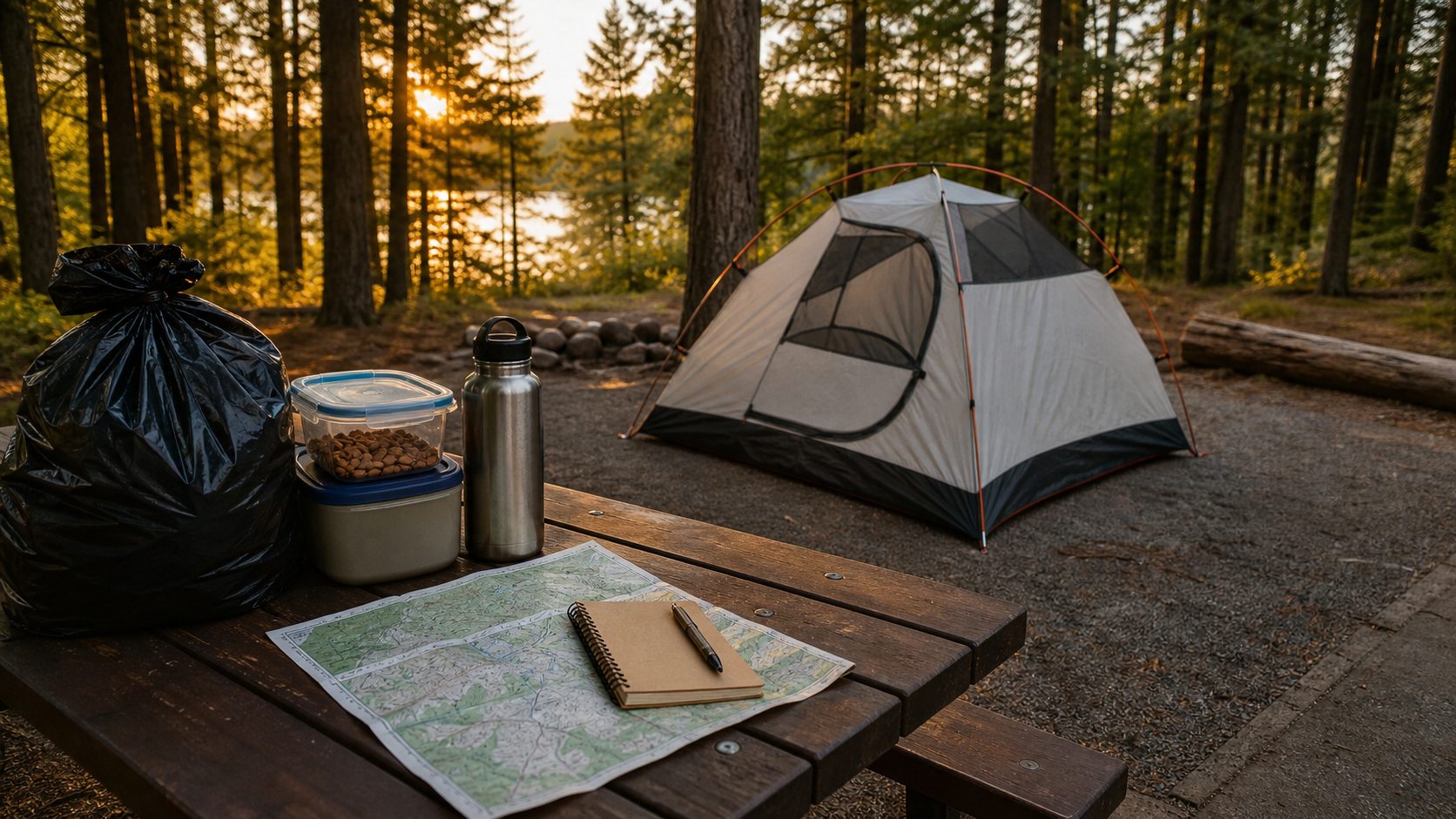
Leave No Trace camping is not a complicated rulebook. For beginners, it is a practical way to plan your campsite, manage trash and food, decide whether a fire makes sense, respect wildlife, and leave other campers with the same outdoor experience you hoped to find.
This checklist is written for US campers using developed campgrounds, public lands or other legal campsites. Always check the current rules for your exact destination, because fire restrictions, food-storage requirements, bathroom rules, permits and quiet hours can change by location and season.
The Beginner Leave No Trace Checklist
Use this as a quick pre-trip and in-camp checklist, then read the sections below for the reasoning behind each step.
Before You Leave Home
- Read the campground or land-manager rules before you pack.
- Confirm whether campfires are allowed and whether restrictions have changed.
- Pack trash bags and a plan for food scraps, packaging and dish cleanup.
- Bring food storage that matches the local rules, especially in wildlife areas.
- Know whether toilets are available; if not, check the local human-waste method.
- Pack only what you need and remove excess packaging before the trip.
- Save maps, reservation details, alerts and rules for offline access if service may be weak.
While You Are at Camp
- Use an existing campsite or a durable surface instead of creating a new bare spot.
- Keep tents, chairs and cooking areas compact.
- Store food, scented items and trash securely whenever they are not in use.
- Never feed wildlife or leave food unattended.
- Use established toilets where available.
- Keep noise, lights and campsite spread respectful of nearby campers.
- Treat a campfire as optional; use one only where it is allowed and manageable.
Before You Leave
- Pick up food scraps, twist ties, bottle caps, micro-trash and tent-stake packaging.
- Check the picnic table, fire ring, ground and parking area for anything left behind.
- Put out any allowed fire completely and confirm it is cold before leaving.
- Pack out trash where no approved trash service is available.
- Leave natural objects, plants, rocks and historical items where they are.
What Leave No Trace Means for Campers
The Leave No Trace 7 Principles organize responsible outdoor behavior around planning ahead, camping on durable surfaces, disposing of waste properly, leaving what you find, minimizing campfire impacts, respecting wildlife and being considerate of others.
For a beginner camper, those principles become very practical. Planning ahead means knowing whether your campground has water, trash service, fire permissions and food-storage rules. Camping on durable surfaces means choosing a site that can handle your tent and chairs without crushing new vegetation. Disposing of waste properly means managing trash, food scraps, dishwater and bathroom needs before they become a problem.
Pick a Campsite That Can Handle Your Stay
Start with a legal campsite. That may be a reserved campground site, a designated dispersed site or another location where camping is allowed. Once you are there, look for the lowest-impact place to put your tent and camp furniture.
The USDA Forest Service warns that creating new campsites can kill vegetation and lead to soil erosion. Its responsible recreation guidance recommends using an existing site when possible or choosing a spot where vegetation is absent.
Keep your site compact. Put the tent, chairs and cooking area where durable ground or existing site features already exist. Avoid digging trenches, building tent platforms, cutting live branches or expanding the campsite footprint. If the site has a tent pad, picnic table or established parking spot, use those cues instead of reinventing the layout.
Internal planning help: pair this with Trail Gear Review’s weekend camping checklist for beginners so your packing plan supports the campsite rules instead of fighting them.
Pack Out Trash and Handle Waste Correctly
Trash is not only the obvious bag at the end of the trip. It includes food scraps, snack wrappers, bread tabs, twist ties, bottle caps, torn packaging, foil, cigarette waste and anything that can blow away while you are cooking or packing up.
The National Park Service cooking-in-camp guidance recommends keeping food areas clean and checking picnic tables, fire rings, fire grates and the ground for anything that might attract animals. A simple campsite habit helps: keep one trash bag available during meals, then do a final walk-through before checkout.
If toilets are available, use them. If they are not, follow the land manager’s current rule. USDA Forest Service responsible recreation guidance says that where no public restroom is available, campers should find a spot at least 200 feet from any water source, dig a 6- to 8-inch hole for human waste and pack out used toilet paper and feminine products. Some places require wag bags or other pack-out systems instead, so do not assume one method is valid everywhere.
Store Food So Wildlife Stays Wild
Food storage is one of the easiest places for a beginner trip to go wrong. The National Park Service says food storage is important for the safety of both people and wildlife, and that animals that are fed or get into human food can become comfortable around people.
- Never feed wildlife.
- Do not leave food, coolers, liquid containers, trash or scented items unattended.
- Follow local food-storage rules before defaulting to your own method.
- Keep food in airtight containers or coolers when appropriate.
- Check tables, fire rings and the ground for crumbs and scraps after meals.
- Store rations and trash securely and out of reach.
In bear country, desert campgrounds, national parks and some public-land areas, the correct method may be very specific: a bear box, locked hard-sided vehicle, approved canister, food pole or another local system. Treat local rules as the authority.
Treat Campfires as Optional, Not Automatic
A campfire can feel central to camping, but Leave No Trace asks campers to minimize campfire impacts. The beginner-friendly version is this: do not build a fire unless it is allowed, needed, contained and easy to manage safely.
Check current fire restrictions close to your trip. USDA Forest Service guidance notes that restrictions can change daily or even hourly. The same guidance recommends using existing fire rings, keeping fires small and never leaving a campfire unattended. It also says to put a campfire out by slowly pouring water and stirring until all material is cool to the touch, and not to bury a fire because coals can smolder and reignite.
The National Park Service campfire guidance is another reminder to confirm whether fires are permitted at your destination. Do not burn trash, create a new fire ring, cut live wood or treat fire restrictions as optional.
Respect Other Campers and the Place You Came to Enjoy
Leave No Trace includes being considerate of others because outdoor impact is not only about soil, trash and wildlife. Noise, lights, crowding and careless trail behavior can change someone else’s trip.
USDA Forest Service courtesy guidance encourages visitors to respect others, camp away from trails and other visitors where practical, and let nature’s sounds prevail by avoiding loud voices and noises. At a campground, that means learning quiet hours, keeping music low or off, dimming bright lights when you can, controlling pets under the rules and giving neighboring sites space.
Also leave natural and cultural objects in place. Do not carve trees, move artifacts, build rock furniture, mark routes with unnecessary cairns or take plants, antlers, rocks or historic objects as souvenirs.
Final Camp Sweep Before You Leave
Before the car doors close, walk the campsite slowly. Look under the picnic table, around the tent pad, near the fire ring, by the parking spot and along the path to the restroom or water spigot.
- Pick up all visible trash and micro-trash.
- Check for food scraps and spilled snacks.
- Confirm food, trash and scented items are not left behind.
- Make sure any allowed fire is completely out and cold.
- Restore moved camp items to the condition required by the campground.
- Leave natural objects where they were.
- Take one last look from the road or trail as if you were the next camper arriving.
The best beginner Leave No Trace checklist is not about perfection. It is about preparing well, following local rules, noticing small impacts before they become big ones and leaving the campsite ready for the next outdoor story.