

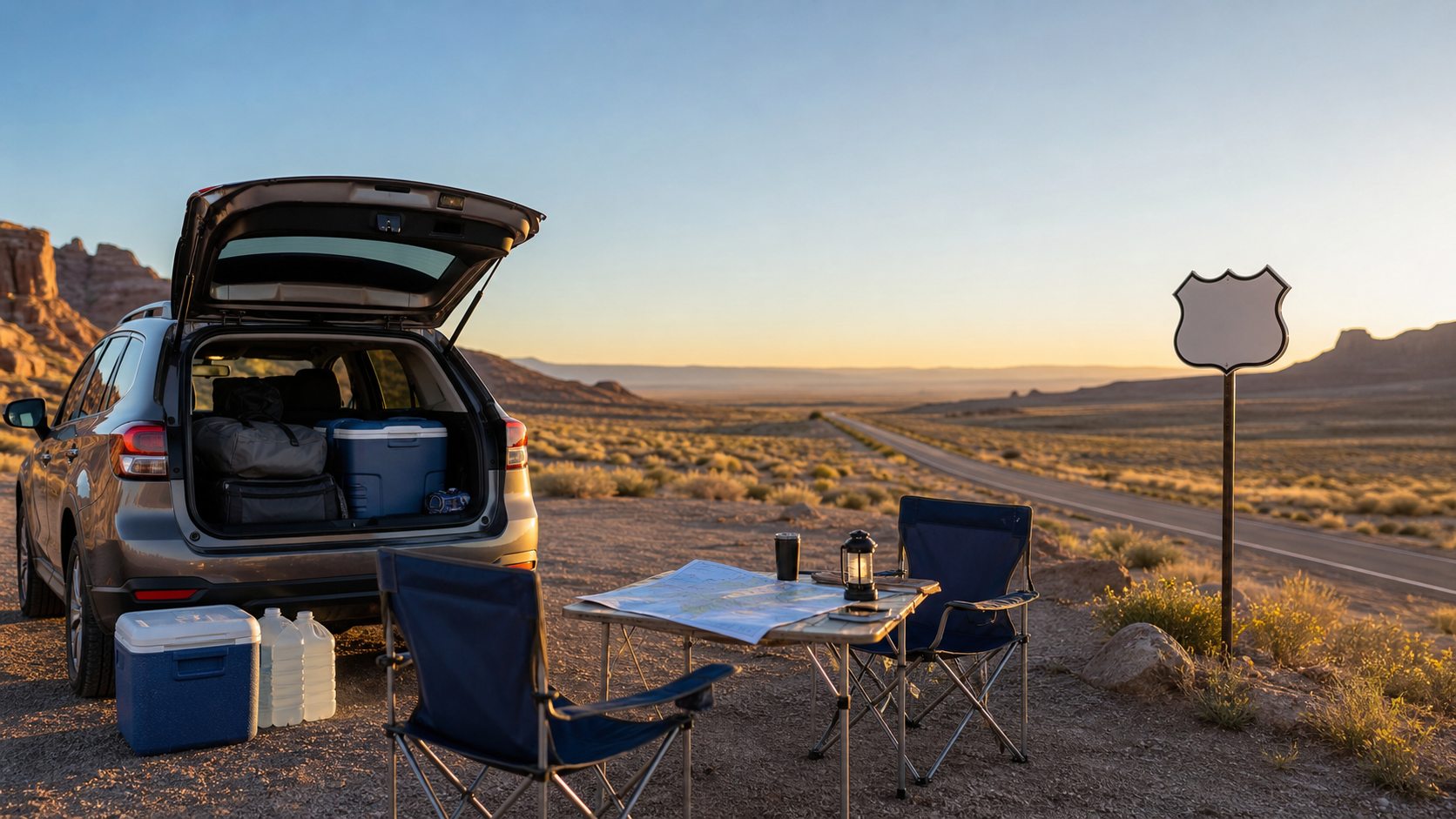
The best Route 66 camping road trip for 2026 is not a race from Chicago to California. Build it as a flexible 14- to 21-day camping route with shorter drive days, one primary campsite, two backups, daily weather checks, planned fuel stops and enough slack to handle historic-road detours.
Route 66 is a historic route, not one continuous modern highway with identical conditions from end to end. The National Park Service says the road stretched about 2,400 miles from Chicago to Los Angeles and that many parts can still be driven, but signs, exhibits and road markings now guide travelers through surviving alignments. For campers, that means the planning work matters as much as the route itself.
Quick Answer: Build a Flexible Route 66 Camping Plan
Start with a broad east-to-west or west-to-east route, then plan each travel day around three things: how far you are willing to drive, where you can legally sleep and what you will do if the first plan fails. A camping itinerary should leave room for weather, road work, full campgrounds, heat, food resupply and unexpected slowdowns.
A practical Route 66 camping day usually works better at 150 to 250 miles than at a maximum interstate pace. That range is an editorial planning target, not an official rule. It gives you time to break camp, drive historic alignments, stop for food and fuel, check in before dark and pivot to a backup campground if needed.
Why 2026 Matters for Route 66 Campers
Route 66 officially opened in 1926, and 2026 is its centennial year. The Route 66 Centennial Commission says Congress established the commission to study and recommend activities for the 2026 centennial anniversary of U.S. Route 66. That timing may bring more attention to the road, more events and potentially more competition for convenient overnight stops.
Do not treat the centennial as a reason to improvise. Treat it as a reason to reserve key nights earlier, download offline maps, check each state DOT before departure and keep a written backup list. The National Park Service Route 66 travel itinerary highlights more than 100 historic sites, so the best camping version of the trip should leave space for heritage stops instead of turning every day into a long transfer.
How Long Should a Route 66 Camping Trip Take?
If you are camping most nights, plan the whole route in about two to three weeks. The historical route is about 2,400 miles, so a 14-day trip averages roughly 170 miles per day before side trips, detours and rest days. A 21-day trip drops that pressure and makes campground check-in, cooking, laundry, weather delays and sightseeing much easier.
Use three pacing options:
- 10 to 12 days: fast road trip with limited camping flexibility.
- 14 to 16 days: realistic camping pace for many travelers.
- 18 to 21 days: best if you want historic stops, national park side trips or more rest.
Build at least one low-mileage reset day after the Plains and another before or after the desert Southwest. Heat, wind, storms, tire issues and sold-out campgrounds become harder to solve when every day is already packed.
Build Each Drive Day Around Three Campsite Options
For each night, choose a primary campsite, a close backup and a farther backup. The primary can be a reserved campground, state park, private campground or legal public-land option. The close backup should be within the same day plan. The farther backup should still be reachable before dark if weather, traffic, road work or campground availability changes.
The National Park Service says many NPS campgrounds require reservations through Recreation.gov, and that park websites or the NPS app are the best sources for park-specific camping information. Use those sources for national park nights and download park details before entering weak-service areas.
Public-land camping needs extra care. The Bureau of Land Management says it manages developed campgrounds with varying amenities, fees, stay limits and seasonal operations. BLM also says most of its lands allow dispersed camping unless an area is closed or restricted, but rules vary locally and vehicles should stay on designated roads unless off-road travel is specifically allowed.
If you want to use public lands near the route, pair this article with Trail Gear Review’s guide to planning an overlanding route on public lands. For Route 66, camp anywhere is the wrong assumption. Verify the land manager, local signs, fire rules, permits and road access before counting on a spot.
Check Weather, Heat and Storm Risk Before Each Segment
Route 66 crosses very different weather zones: Midwest humidity, Plains storms, high-desert temperature swings and hot desert stretches. The National Weather Service says heat can lead to heat-related illness and can worsen existing health conditions. Its heat guidance also warns that it is never safe to leave a child, disabled person or pet locked in a car.
For campers, that translates into a simple daily habit:
- Check the forecast for the drive corridor, not only tonight’s campground.
- Watch heat, wind, lightning and flash-flood alerts before committing to a remote camp.
- Plan shade, water and cooling stops before the hottest part of the day.
- Keep a motel or developed campground option on very hot or stormy nights.
- Avoid arriving after dark at unfamiliar dispersed sites.
Lightning also deserves respect. NWS lightning guidance says lightning strikes the United States about 25 million times per year and that people can be struck at any time of year. If storms are building, a metal-roofed vehicle or a substantial building is a better plan than an exposed campsite, overlook or picnic shelter.
For app planning, use Trail Gear Review’s guide to camping apps for planning, weather and offline maps. Apps help, but the source hierarchy should be official forecast, official road condition, land-manager rules and then convenience apps.
Plan Fuel, Food and Vehicle Backups Before the Desert Segments
The classic Route 66 mood is open road, but the practical camping version starts with fuel, tires, water and food. NHTSA recommends checking weather, road conditions and traffic before heading out, allowing enough time and telling others your route and ETA. It also recommends an emergency roadside kit with items such as a phone and charger, first aid kit, flashlight, jumper cables, tire pressure gauge, jack, water, nonperishable food, maps and emergency blankets.
Before long rural stretches, top off fuel earlier than you normally would, especially if you are detouring onto historic alignments or carrying camping weight. Keep paper or offline maps available because a dead phone, weak signal or app reroute can make a simple detour confusing.
Food needs the same backup mindset. FoodSafety.gov says camping trips should include food safety planning. It also notes that foodborne illnesses tend to increase during summer months because bacteria multiply faster in warm weather and people cook outside more often. For lunches and perishable snacks, FoodSafety.gov says bacteria that cause food poisoning grow rapidly between 40 F and 140 F and recommends two cold sources when refrigeration may not be available.
For a Route 66 camping route, keep the first half-day of food simple: shelf stable breakfast, road lunch, plenty of water and a cooler plan that does not depend on finding ice at the last minute. If you are running a fridge, lights, phones or navigation devices at camp, review Trail Gear Review’s guide to portable power for camping before choosing your battery and charging plan.
A Practical East-to-West Route 66 Camping Framework
Use this as a planning framework, not a fixed itinerary. Reverse it if you are driving west to east.
| Segment | Planning focus | Camping strategy |
| Chicago to Missouri | Urban departure, Midwest weather, first shakedown night | Reserve the first night so the trip starts calmly. |
| Missouri to Oklahoma | Historic towns, longer rural sections, storm awareness | Keep a developed campground backup near your target town. |
| Oklahoma to Texas Panhandle | Wind, heat, fuel spacing and long views | Shorten drive days if storms or high winds are forecast. |
| Texas to New Mexico | Elevation change, desert transition, cooler nights possible | Confirm campground operating dates and water availability. |
| New Mexico to Arizona | High desert, national park side trips, remote-feeling roads | Reserve key nights and keep a farther backup. |
| Arizona to California | Heat, long desert segments, traffic near the coast | Start early, top off fuel, and do not rely on a single remote camp. |
The National Park Service maintains a Route 66 page that links to national and state Departments of Transportation for Route 66 states. Use those DOT sources before and during the trip, because closures, construction and detours can change faster than a saved travel article.
Route 66 Camping Checklist for 2026
Before you leave:
- Choose east-to-west or west-to-east and set a realistic total trip length.
- Keep most drive days around 150 to 250 miles unless you knowingly accept a faster pace.
- Reserve the first night, high-demand nights and any national park nights early.
- For every night, list one primary campsite and two backups.
- Save campground rules, check-in times, cancellation rules and gate hours offline.
- Check state DOT pages for road conditions and closures.
- Check NWS forecasts for the drive corridor and camp area.
- Top off fuel before rural or desert stretches.
- Carry a roadside emergency kit, paper or offline maps, water and nonperishable food.
- Use a cooler/fridge plan that keeps perishable food cold.
- Share your route and ETA with someone who is not on the trip.
- Bring the basics from a weekend camping checklist for beginners even if the trip feels more like a road trip than a campground weekend.
The point is not to remove all uncertainty. Route 66 is memorable because it is not a sterile point-to-point drive. The goal is to keep the uncertainty manageable: enough structure to stay safe, enough slack to enjoy the road and enough backups that one full campground or storm cell does not wreck the trip.