

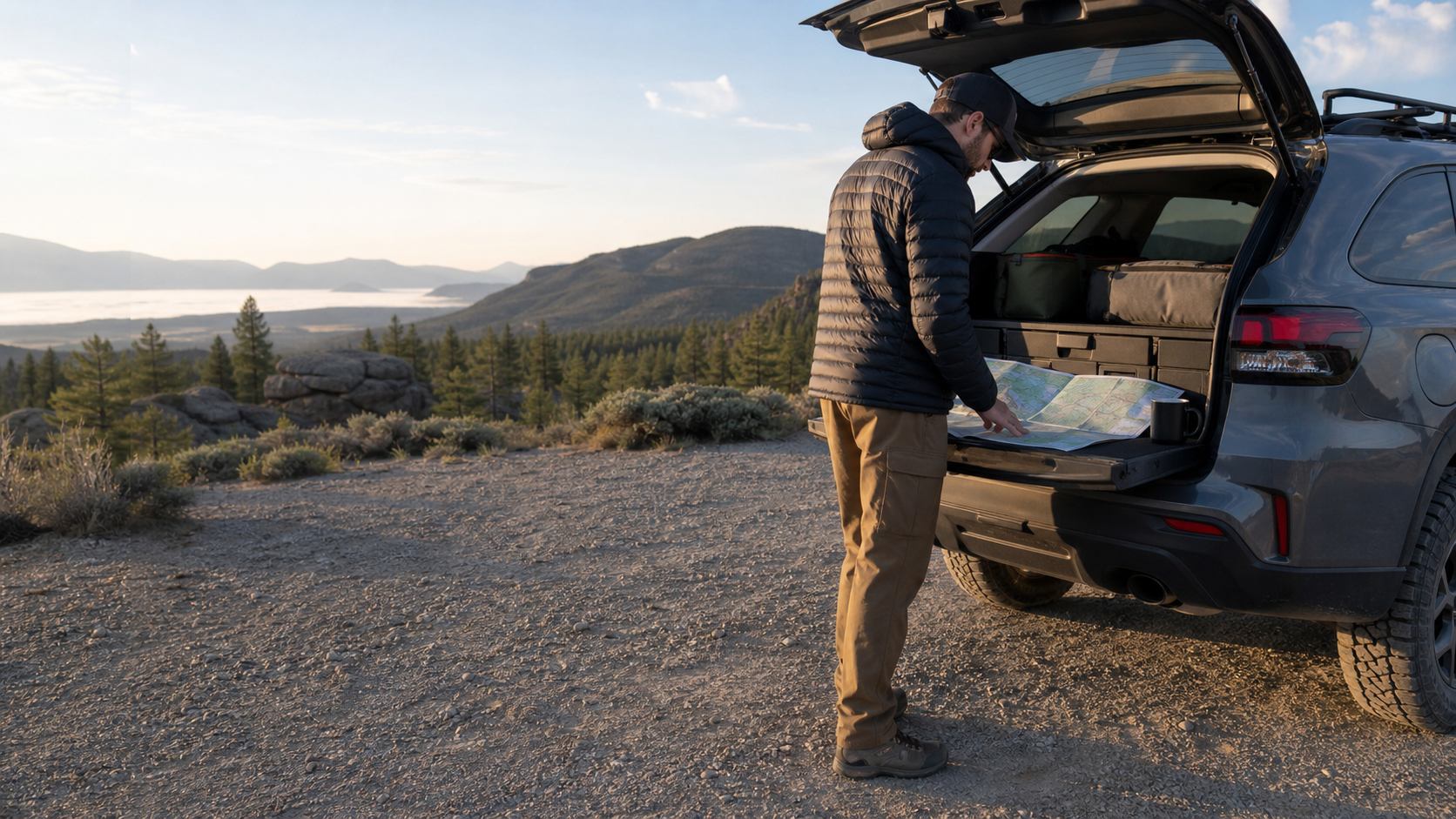
A first overlanding-style trip does not need a remote trail or an elaborate vehicle build. It needs a route you are allowed to drive, a place you are allowed to stop overnight, a vehicle prepared for the planned conditions and a fallback if the original plan no longer works. On U.S. public lands, the most important first step is not choosing a scenic map pin. It is identifying the agency responsible for the land and checking its current route, camping and safety information.
Start With the Land Manager, Not a Map Pin
Public land is not one single rulebook. A trip may involve National Forest System land managed by the U.S. Forest Service, land managed by the Bureau of Land Management (BLM), a National Park Service (NPS) destination or another state or local authority. Each managing agency can provide different information about where vehicles may travel, where camping is permitted, which facilities are available and what temporary restrictions apply.
Begin route planning by writing down the exact destination area and its responsible field office, ranger district, forest, park or recreation area. Find the official website for that location before relying on a third-party map or social-media location. Look for travel maps, camping pages, alerts, seasonal notices, fire restrictions and contact information. An online pin can help you form an idea; it does not establish that a road is open or an overnight stop is lawful.
This step also makes the rest of planning easier. Once you know which office controls the area, you know where to confirm road rules, current conditions and camping requirements shortly before departure.
Confirm Where Motorized Travel Is Allowed
For a vehicle-supported trip, route legality comes before route scenery. On relevant National Forest System lands, the U.S. Forest Service says a Motor Vehicle Use Map (MVUM) identifies roads, trails and areas designated for motor vehicle use, including vehicle classes and seasonal designations where applicable. A route that is not designated for motor vehicle travel on the applicable MVUM should not be treated as a driving route simply because it appears on another map.
An MVUM is a rules reference, not a complete trip-planning map. It may not show the terrain detail, campsite context or changing conditions you want for orientation. Use the current map for the correct forest or district alongside official alerts and a suitable general reference map. If a seasonal designation or closure affects your timing, choose a different route rather than assuming previous online reports remain current.
On BLM-managed land, the BLM’s travel and transportation program explains that motorized access is managed through local route networks and travel decisions. That means a beginner should find the applicable BLM field-office information and current travel map or notice for the destination area. A general assumption that all unpaved roads on public land are open is not a route plan.
Choose an Overnight Stop That Is Actually Allowed
A legal road does not automatically mean camping is allowed wherever you pull over. Decide whether your trip will use an established campground, an authorized dispersed-camping area where permitted, or another specifically allowed overnight option. Then verify rules with the managing agency for that precise location.
For NPS destinations, the National Park Service camping hub directs visitors to park-specific information because campground availability, reservations, services and regulations differ by park. Forest Service and BLM areas likewise require local checks for camping rules, closures and fire restrictions. Keep the official page or office contact in your planning notes and review current notices again close to the trip date.
For a first outing, an established campground or clearly documented overnight location can reduce uncertainty. It lets you focus on route preparation and campsite routines instead of trying to interpret unfamiliar access rules after arrival. If an intended overnight location cannot be confirmed through the responsible agency, choose a documented alternative before leaving.
Match the Plan to Basic Vehicle Readiness
A route plan should fit a vehicle’s condition and the driver’s preparation; it should not depend on confidence alone. This guide does not rate routes or vehicles for off-road capability. Instead, use conservative pre-trip checks and avoid committing to conditions you cannot assess confidently.
Before departure, complete the ordinary maintenance and condition checks appropriate to your vehicle and address any issue that makes you uncertain about the planned travel. The needs of a particular unpaved route can go beyond normal road-trip preparation, so a basic check is a starting point, not proof that a vehicle is suited to difficult terrain.
Ready.gov recommends keeping emergency supplies in a vehicle. For an outdoor route plan, keep preparation practical: carry supplies appropriate to your passengers, climate and expected travel time; begin with enough fuel or charging margin for the planned route and a conservative fallback; and know where you can safely turn around or return to a developed road. Do not make a longer or rougher route part of the plan simply because equipment is packed.
Build a Route Plan With a Backup Option
Once a route and overnight location are verified, turn them into a plan that remains useful if cell coverage is poor or conditions change. Record the official destination or campsite name, managing agency, planned access roads, expected arrival and return timing, relevant office or campground contact information and at least one conservative fallback destination or exit option.
Save the official information you need before traveling beyond reliable data service. A downloaded route is useful only when it can be opened offline and is paired with current agency information. For a step-by-step map and backup workflow, use our offline navigation plan for camping and overlanding, which covers official destination maps, offline downloads and non-phone backups.
Share appropriate trip details with a trusted contact, particularly when you will travel beyond developed campgrounds or reliable communication. The NPS Trip Plan provides a framework for recording where you intend to go and when you expect to return. A shared plan does not guarantee assistance, but it makes your intended route and timing clearer if plans need to be checked.
Finally, make a simple decision rule: if the current official information, weather, fire restrictions, road condition or your own comfort level does not support the planned route when it is time to go, use the fallback or postpone. A beginner-friendly plan is successful when it makes turning around straightforward.
Beginner Public-Land Route Planning Checklist
Run through this checklist before your first vehicle-supported overnight trip on public land:
- Identify the agency and local office or destination page responsible for the area.
- Confirm that each planned motorized route is designated or otherwise permitted through current official information.
- For National Forest System travel where applicable, obtain the correct current MVUM and review vehicle-class or seasonal details.
- For BLM travel where applicable, find the local travel-management map, plan or notice for your route area.
- Choose a documented permitted overnight option and check reservation or local camping requirements.
- Review current alerts, closures, weather-related notices and fire restrictions near departure.
- Perform sensible vehicle safety checks and carry appropriate emergency supplies.
- Plan fuel or charging needs conservatively and identify a fallback exit or overnight option.
- Download required route information for offline access and carry a suitable backup reference.
- Share relevant route and timing details with a trusted contact when appropriate.
Your first overlanding route does not need to be the most isolated one on the map. A well-prepared trip follows current rules, leaves room for changing conditions and gets you comfortable with the habits that support future adventures. Complete the plan with a weekend camping checklist for beginners, and see our research-first editorial approach for how these guides are prepared.