

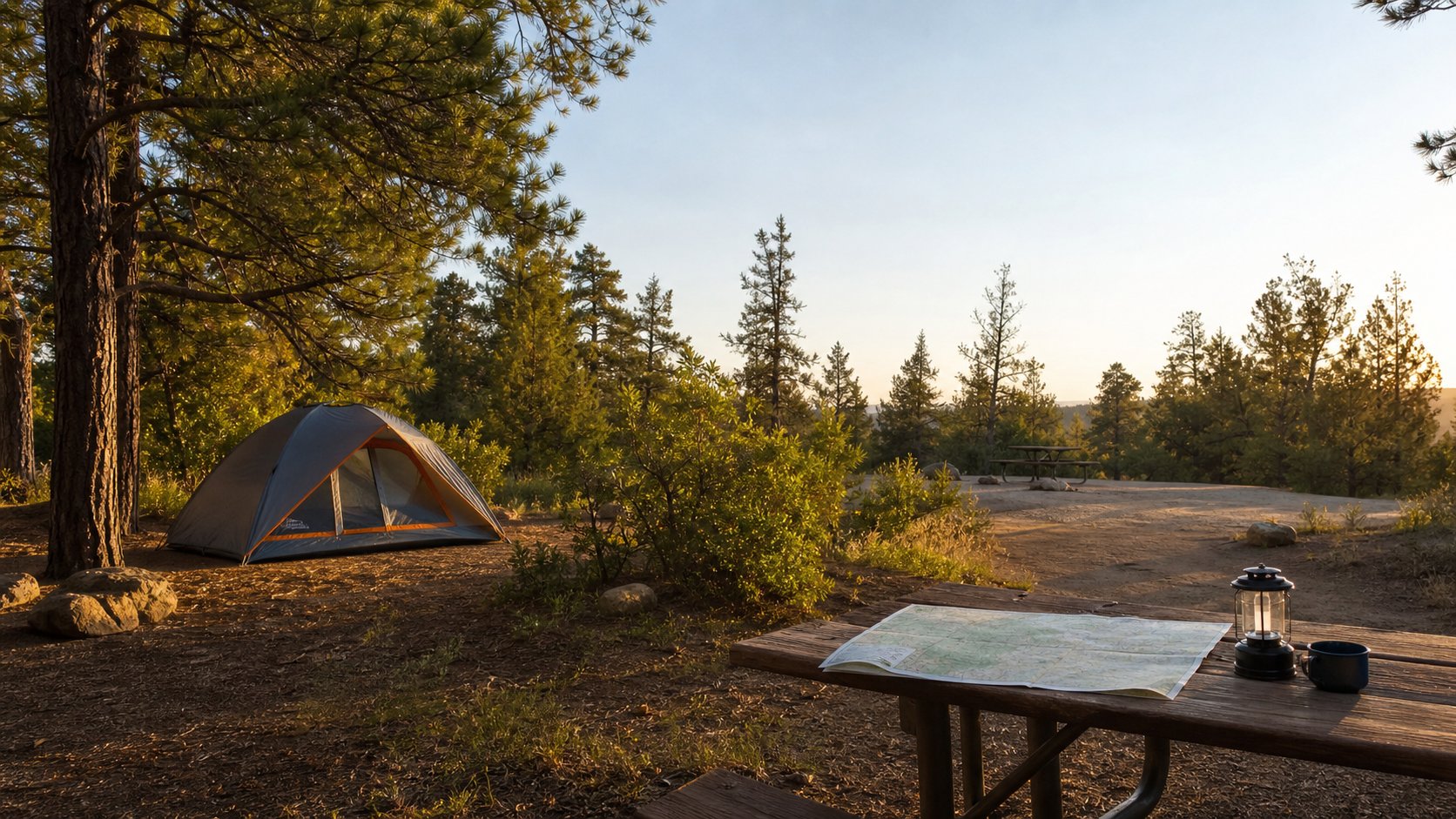
Crowded campgrounds are easier to handle when you stop treating the trip as a single reservation problem. Start with timing, choose quieter loops and site types, keep legal backups ready, verify public-land rules before you leave, and set expectations around noise, neighbors and shared spaces.
This guide is written for US campers who still want normal campground trips, not a complete leap into remote travel. It is research-only, includes no affiliate links and does not claim that Trail Gear Review personally tested any campground, app, campsite or public-land area.
The Short Version
If campgrounds feel too crowded, change one variable at a time: dates, arrival timing, loop choice, site type, distance from high-traffic amenities, or the kind of campground you book. A calmer trip often comes from choosing the shoulder season, avoiding holiday weekends, booking a less central loop, or adding a legal backup outside the busiest campground.
Do not solve crowding by improvising an illegal campsite. Official campground pages, Recreation.gov facility rules, public-land field offices and park regulations decide where you can sleep, whether you need a reservation, what fires are allowed and what services exist.
Why Campgrounds Feel More Crowded Now
Campground crowding is not just a personal annoyance. The Dyrt’s 2026 Camping Report says more than half of surveyed campers had difficulty booking a site because campgrounds were full. KOA’s 2026 Camping and Outdoor Hospitality Report also says over 52 million North American households camped in 2025, which helps explain why popular weekends and easy-access sites can feel pressured.
That does not mean every campground is packed all the time. It means campers need a more deliberate plan. The busiest combination is usually a popular destination, peak season, weekend dates, easy road access, reservable sites, good amenities and a campground close to a famous trail, lake, beach or park entrance.
It also helps to define what too crowded means for your group. Some campers are bothered by generators, dogs, music or headlights. Others mainly want more distance from the bathhouse, fewer RVs, less dust, a lower chance of late-night arrivals or a place where kids can settle down without feeling boxed in. The better you define the friction, the easier it is to pick the right fix.
Change the Timing Before You Change the Whole Trip
Timing is usually the cleanest first adjustment because it keeps the trip familiar while lowering the pressure. Before giving up on a destination, check whether a different date pattern would solve the problem.
- Camp Sunday through Thursday instead of Friday through Sunday.
- Choose the week before or after a major holiday instead of the holiday itself.
- Use shoulder-season windows when weather is still realistic but demand is lower.
- Arrive earlier in the day when first-come-first-served or self-selection matters.
- Stay one extra night if it lets you avoid the busiest arrival or departure rush.
- Book the less famous nearby campground and drive to the main attraction during the day.
Reservation rules matter here. The National Park Service says many campgrounds require reservations through Recreation.gov, and Recreation.gov policies vary by inventory type and facility. If you plan to hold a backup, read the specific cancellation, modification, late-cancellation and no-show rules before assuming the backup is low-risk.
Timing also affects stress after you arrive. NPS campsite guidance advises campers to make camp before dark and learn the terrain during daylight. That is especially useful in a crowded campground, where late arrivals can mean more noise, tighter parking, more confusion about site boundaries and less patience from everyone nearby.
For broader planning support, Trail Gear Review’s guide to camping apps for planning, weather and offline maps can help organize dates, weather checks and offline details. Apps are useful, but official campground and land-manager pages remain the final rule source.
Pick Quieter Sites Inside Developed Campgrounds
A crowded campground can still have better and worse site choices. Instead of only asking whether a campground is available, look at how the loop is arranged and what kind of traffic will pass your site.
- Bathhouses, flush toilets and shower buildings.
- Dump stations, water spigots and trash areas.
- Campground entrances, host sites and registration kiosks.
- Beach, boat ramp, trailhead or playground access.
- Group sites and large RV loops.
- Main roads, overflow parking and late-arrival lanes.
This is not a guarantee. A remote corner can still have a loud neighbor, and a central site can be fine if the campground is well managed. The point is to reduce predictable friction. If you know generators bother you, do not choose a loop where generator use is central to the camping style. If headlights bother you, avoid sites facing the main loop road. If kids need sleep, avoid the bathroom path that every site uses after dark.
Read site details before booking. NPS campsite guidance tells campers to check facilities and regulations such as potable water, campfires, group size, showers, toilets, food storage and reservations. Those details also reveal how much self-sufficiency a quieter site may require.
Build a Backup Plan Before the Main Campground Fills
A strong backup plan lowers the emotional load of camping in a busy season. The mistake is waiting until the favorite campground is full, then panic-searching for any opening within driving distance.
- Your preferred campground and dates.
- The same campground on quieter dates.
- A less central loop or nearby developed campground.
- A state, county, city or regional campground.
- A private campground or RV park if amenities and cost fit.
- National Forest or BLM options only where official rules and conditions support them.
- A non-camping lodging fallback if the trip cannot safely or legally continue.
For each backup, record the managing agency, reservation link, cancellation rules, check-in window, water, toilets, pets, fire rules, quiet hours, vehicle-size limits and the route from your main destination. If the backup requires a longer drive, compare the full trip cost, not just the nightly fee. Trail Gear Review’s budget camping planning guide can help with that tradeoff.
Keep the backup realistic. A legal campsite 50 miles away may be calmer, but it may not feel like a good answer if you arrive after dark, lose cell service, miss check-in or have to drive back to the main activity every morning.
Use Public-Land Alternatives Carefully
Public-land camping can be a good crowd-pressure release, especially in parts of the western US, but it is not a loophole for skipping campground rules. It works best for campers who are ready to verify land status, road access, services, fire rules, waste requirements and local restrictions before leaving home.
BLM says most BLM lands allow dispersed camping unless an area is posted closed to camping or has specific restrictions for land use or conservation. BLM also says dispersed camping is generally limited to 14 days within a 28-day period, while specific limits vary by state and field office.
National Forest dispersed camping needs the same caution. The USDA Forest Service describes dispersed camping as camping outside a designated campground and notes that services such as piped water, toilets or trash removal may be absent. That means the quieter setting may require more preparation, not less.
- The exact land manager and local office.
- Whether camping is allowed at that location.
- Whether a permit, pass, fee or fire permit is required.
- Current fire restrictions and whether stoves or fires are allowed.
- Road conditions, seasonal closures and vehicle suitability.
- Water availability or the need to bring all water.
- Toilet, trash and food-storage requirements.
- Stay limits and distance-from-road or campsite rules.
- Whether cell service is likely and what offline map backup you have.
Trail Gear Review’s offline navigation backup plan is useful here. Public-land alternatives are less stressful when you know where you are, where you are allowed to go and how you will leave if the first spot is full, closed or inappropriate.
Reset Expectations When You Cannot Avoid People
Sometimes the right answer is not escaping the crowd. It is choosing a trip style that still feels worthwhile when other people are nearby.
KOA’s 2026 report says 77% of campers say being in nature is enough without structured programming or extra amenities. That is a useful reset: the campground does not need to deliver a perfect wilderness feeling to be a good trip. It can still give you a night outside, fresh air, simple meals, a morning walk, time away from screens and a basecamp for nearby activities.
- Decide whether the trip is about quiet, convenience, scenery, family time or access to a destination.
- Bring low-noise activities that work at your site, such as cards, books, a journal or a simple walk route.
- Plan one off-site activity if the campground feels busy during peak hours.
- Use earplugs or white-noise habits if campground sound is predictable and allowed.
- Build in downtime away from the busiest campground features.
- Leave if a site feels unsafe, illegal or unmanageable; do not force a bad plan.
This mindset helps avoid the common disappointment of expecting solitude from a developed campground that was designed to host many people. If solitude is the real goal, choose a trip format that is built around solitude and verify the extra responsibilities that come with it.
Campground Etiquette That Lowers Everyone’s Stress
Crowding feels worse when campers treat shared space as private space. Good etiquette cannot make a campground empty, but it can make a busy campground more tolerable.
Leave No Trace Principle 7 advises visitors to respect others, protect the quality of their experience, let nature’s sounds prevail and avoid loud voices and noises. For campgrounds, that translates into simple habits:
- Follow posted quiet hours and keep music low or off.
- Avoid walking through other campsites.
- Keep pets under control and follow leash rules.
- Aim headlights, lanterns and vehicle lights away from neighboring tents.
- Do not run generators outside allowed hours.
- Keep food, trash and scented items controlled so they do not attract wildlife or create mess.
- Pack out trash, leftover food and litter.
- Use toilets, trash stations and dishwashing rules as posted by the campground.
- Teach kids campsite boundaries without making them feel unwelcome outdoors.
Leave No Trace waste guidance also says to pack out trash, leftover food and litter. In developed campgrounds, follow the campground’s restroom, trash and dishwashing rules first. In less-developed settings, verify the correct waste method with the land manager before assuming backcountry practices apply.
For a deeper low-impact refresher, use Trail Gear Review’s Leave No Trace camping checklist for beginners.
Crowded Campground Checklist
- Choose the least crowded date pattern you can manage.
- Check the official campground or park page before relying on third-party information.
- Read reservation, cancellation, modification and no-show rules.
- Pick a loop and site away from the specific friction that bothers you most.
- Confirm potable water, toilets, showers, fire rules, food storage and group-size rules.
- Plan to arrive with enough daylight to set up calmly.
- Save confirmations, maps and campground rules for offline access.
- Build at least one legal backup campsite or non-camping fallback.
- If considering BLM or National Forest dispersed camping, verify local rules and services.
- Bring enough water, trash capacity and lighting for the actual site conditions.
- Follow quiet hours and keep pets, lights, food and trash under control.
- Use the weekend camping checklist for beginners if you also need a packing pass.
- Decide in advance what would make you leave or switch plans.
Bottom Line
Crowded campgrounds are not always avoidable, but the stress is manageable. Start with a better date pattern, choose sites away from predictable traffic, keep legal backups ready, use public-land alternatives only when the rules and services are clear, and camp in a way that does not make the campground feel worse for the next person.
The goal is not to find a secret perfect campsite every time. The goal is to make a calmer, legal and realistic plan before the busy campground starts making decisions for you.
Sources and Method
This article uses public reports and official or outdoor-ethics sources. It does not include affiliate links, campground rankings, product testing claims, personal campsite experience claims or unsourced legal/safety claims.
- The Dyrt: 2026 Camping Report
- KOA: 2026 Camping and Outdoor Hospitality Report
- National Park Service: Find a Campground
- Recreation.gov: Rules and Reservation Policies
- Bureau of Land Management: Camping
- USDA Forest Service: Dispersed Camping
- National Park Service: Finding and Setting Up a Campsite
- Leave No Trace: Be Considerate of Others
- Leave No Trace: Dispose of Waste Properly