

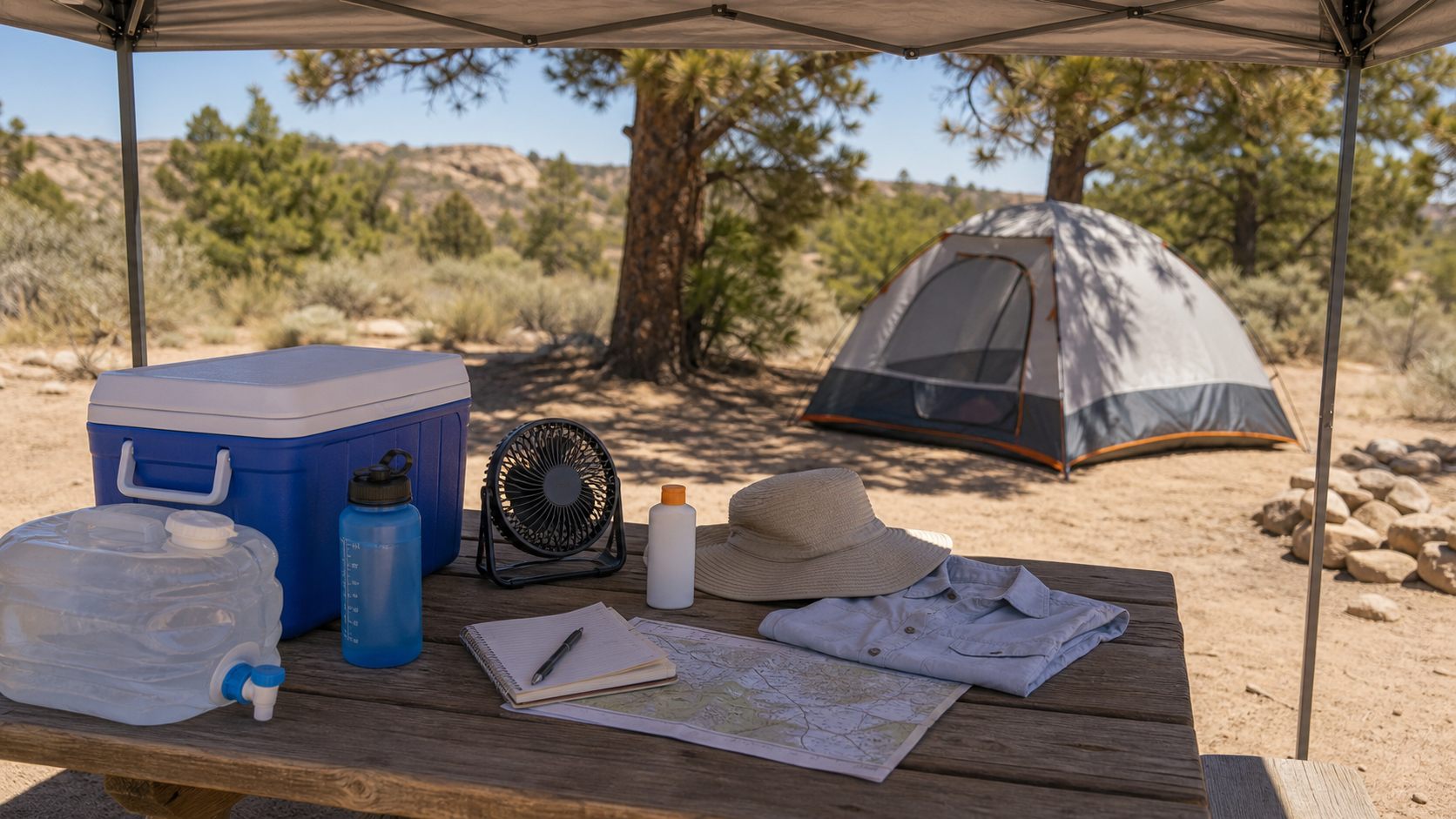
Camping in extreme heat is not just a comfort problem. Heat can change whether a campsite is reasonable, how much water you need to carry, when you should set up camp, how you sleep, and what warning signs should end the trip early.
This checklist is written for US campers planning hot-weather car camping, campground stays and road-accessible summer trips. It is research-based, uses official safety sources and does not include affiliate links or hands-on product claims. Always check current local alerts, park rules and forecasts before deciding to go.
The Short Version: Extreme-Heat Camping Checklist
Before you commit to the trip, run through these go/no-go checks:
- Check the local forecast, heat advisories and the National Weather Service HeatRisk outlook for your destination.
- Avoid making the hottest part of the day your setup, hiking, cooking or driving-stress window.
- Pick a campsite with real shade options or bring a documented shade plan.
- Carry more drinking water than a normal mild-weather trip, and know where legal refill points are.
- Bring light-colored, lightweight clothing, sun protection and a way to cool skin with water or damp cloths.
- Keep cold food at 40 F or below and limit how long perishables sit out.
- Plan sleep around overnight lows, ventilation and whether there is any real cooling period.
- Watch everyone in the group for heat exhaustion and heat stroke warning signs.
- Be ready to leave if shade, water, cooling or symptoms stop being manageable.
The point is not to prove that you can camp through anything. It is to decide whether the trip still makes sense with the conditions in front of you.
Why Extreme Heat Changes a Camping Plan
The National Weather Service heat safety guidance explains that heat stress can become dangerous when the body cannot cool itself well enough. For campers, the risk is practical: a campsite may have little shade, a tent may trap heat, a cooler may struggle, and a campground may be far from air conditioning or medical help.
Heat risk also depends on more than the afternoon high. The National Weather Service HeatRisk tool considers how unusual the heat is for the location and date, how long the heat lasts, whether overnight temperatures stay high, and whether conditions are associated with elevated health risk. That matters for camping because a hot night can reduce the recovery window before the next day.
Some campers also have higher heat risk. CDC heat-health guidance lists factors such as age, pregnancy, certain health conditions, some medications, heavy exertion, alcohol or drug use, sunburn and not being acclimated to heat. If any of those apply, treat the trip more conservatively and follow clinician or local public-health guidance.
Check HeatRisk, Forecasts and Local Alerts Before You Go
Start with official weather information, not only a favorite app. Check the destination forecast, heat advisories, overnight lows, humidity, air quality, fire restrictions and campground alerts. Trail Gear Review’s guide to camping apps for planning, weather and offline maps can help you build that planning stack, but the final decision should use current official information.
Use these questions before you leave:
- Is there a heat advisory, excessive heat warning or high HeatRisk level for the area?
- Will the hottest part of the day overlap with arrival, setup, cooking or hiking?
- Does the campground have shade, potable water, showers, a visitor center or other cooling options?
- Is there a realistic way to leave for air conditioning if someone feels unwell?
- Do overnight lows give the tent and the people inside it a chance to cool down?
- Are children, older adults, pregnant campers or people with health conditions part of the group?
- Will pets be exposed to hot ground, poor shade or vehicle heat?
If too many answers are uncertain, simplify the plan. Choose a higher-elevation campground, shorten the stay, arrive near evening, reserve a shaded developed site or postpone.
Build Shade and Cooling Into the Campsite
Shade is part of the plan, not a bonus. EPA sun-safety guidance recommends limiting direct sun, seeking shade, wearing protective clothing and using broad-spectrum sunscreen with SPF 15 or higher. For camping, that means you should think about shade before the tent comes out of the bag.
At camp:
- Put the tent where it will get the earliest shade available, if the site rules allow it.
- Use a canopy, tarp or natural shade without damaging trees or vegetation.
- Keep chairs, cooking setup and water access out of direct sun when possible.
- Wear light-colored, lightweight clothing and a brimmed hat.
- Reapply sunscreen according to the label and use shade/clothing as the primary sun strategy.
- Keep a damp bandana, towel or cloth available for cooling skin.
- Use a battery fan only as support, not as the main safety plan.
That last point matters. NWS heat guidance cautions that electric fans do not cool the air and may not prevent heat illness when temperatures reach the upper 90s. A fan can move air inside a tent or under a canopy, but it does not replace shade, water, rest, cooler timing or access to an air-conditioned fallback.
Responsible campsite setup still matters in hot weather. If you are setting shade or moving camp furniture, keep durable surfaces and low-impact choices in mind; the Leave No Trace camping checklist is a useful companion for that part of the plan.
Plan Water, Electrolytes and Food Safety
Do not plan water from a normal-weather habit. Heat, sun, exertion, altitude, humidity, campsite distance and personal health all affect needs, so this article does not give one fixed amount for everyone.
Build the water plan from questions:
- How many people are going?
- How many hot daylight hours will you spend away from a reliable tap?
- Is potable water available at the campground right now?
- Do you need water for drinking, cooking, cooling cloths, cleaning and pets?
- What is the backup if a spigot is off, a water station is closed or the route changes?
- Does anyone in the group have medical guidance about fluids or electrolytes?
NWS heat guidance recommends drinking plenty of water or other non-alcoholic and decaffeinated fluids during heat. For campers, that means carrying enough water to drink before you are thirsty, plus a reserve for delays. Salty snacks or electrolyte drinks can be useful for some people on hot trips, but avoid medical claims and follow any personal health guidance.
Food safety also gets harder in hot weather. FoodSafety.gov guidance says cold food should stay at 40 F or below, and perishable food should not sit out longer than two hours, or one hour when temperatures are above 90 F. In a campground, that means:
- Pre-chill the cooler before packing if you can.
- Keep drinks and perishable food in separate coolers when practical.
- Use a cooler thermometer rather than guessing.
- Keep the cooler in shade and open it briefly.
- Pack low-risk shelf-stable meals for the hottest day.
- Put leftovers away quickly or skip meals that create risky leftovers.
For general packing beyond heat-specific items, pair this article with Trail Gear Review’s weekend camping checklist for beginners.
Set Up for Hot-Weather Sleep
A tent that felt comfortable in spring can feel very different after a long hot day. Before the trip, check the overnight low, humidity and whether wind or storms could affect ventilation. The NWS HeatRisk framework includes overnight temperatures because sustained heat without nighttime relief can increase risk.
For hot-weather sleep:
- Set the tent after the strongest sun has passed if arrival timing allows.
- Ventilate the tent using mesh panels and rainfly settings that still match the weather.
- Keep drinking water within reach, but do not store open food or scented items in the sleep area.
- Use a light sheet or breathable sleep layer rather than overbuilding the sleep system.
- Keep a headlamp, shoes and keys where you can leave quickly if someone feels unwell.
- Avoid sleeping in a closed vehicle unless it is designed, legal and safely ventilated for that use.
- Have a plan to drive to cooling or end the trip if the night stays too hot.
Solo campers should be especially conservative because there is no camp partner to notice symptoms. If you are camping alone, use a check-in plan like the one in Trail Gear Review’s solo camping safety checklist.
Know the Heat Exhaustion and Heat Stroke Warning Signs
Heat warning signs should change the plan immediately. CDC/NIOSH heat-illness guidance lists heat exhaustion symptoms that can include headache, nausea, dizziness, weakness, irritability, thirst, heavy sweating and elevated body temperature. If those signs appear, move the person to a cooler area, loosen clothing, cool with water or cold compresses, encourage frequent sips of cool water if the person is alert, and seek medical care if symptoms worsen or do not improve.
Heat stroke is an emergency. CDC/NIOSH lists warning signs that can include confusion, slurred speech, loss of consciousness, seizures, very high body temperature and hot dry skin or heavy sweating. Call 911, move the person to a cooler area and cool the person with water, cold compresses or ice while waiting for help. Do not force fluids if the person is confused, unconscious or unable to drink safely.
For a camping group, assign someone to watch for behavior changes, not only complaints. A person who is confused, unusually irritable or no longer making good decisions may not be able to judge their own condition.
Final Hot Weather Camping Packing Checklist
Use this as the final heat-specific layer on top of your normal camping checklist.
Forecast and Decision Tools
- Weather.gov forecast or local NWS page.
- NWS HeatRisk check for destination and travel corridor.
- Campground alerts, fire restrictions and water-availability notes.
- Offline map, saved campground details and a route out to cooling.
- Trip plan shared with someone at home.
Shade and Sun Protection
- Shade canopy, tarp or site-specific shade plan.
- Brimmed hat and sunglasses.
- Lightweight, light-colored clothing.
- Broad-spectrum sunscreen with SPF 15 or higher.
- Bandana, towel or cloth for wet cooling.
Water and Cooling
- Drinking water plus reserve water.
- Refill plan from verified potable sources.
- Electrolyte option or salty snacks, if appropriate for the group.
- Cooler water separate from drinking-water containers if needed.
- Battery fan as comfort support, not the core safety plan.
Food and Cooler Safety
- Cooler thermometer.
- Ice, frozen bottles or cold packs.
- Separate drink cooler if the main cooler will be opened often.
- Shelf-stable meals for the hottest day.
- Trash bags and food-storage method required by the campground.
Sleep and Emergency Backup
- Ventilated shelter setup.
- Light sleep layer.
- Headlamp within reach.
- Phone, charging bank and vehicle keys accessible.
- First-aid kit and personal medications.
- Clear plan to leave, cool down or call 911 if symptoms appear.
Camping in extreme heat should feel planned, not improvised. If the forecast, shade, water, sleep setup or warning signs do not line up, changing the trip is the safer outdoor skill.