

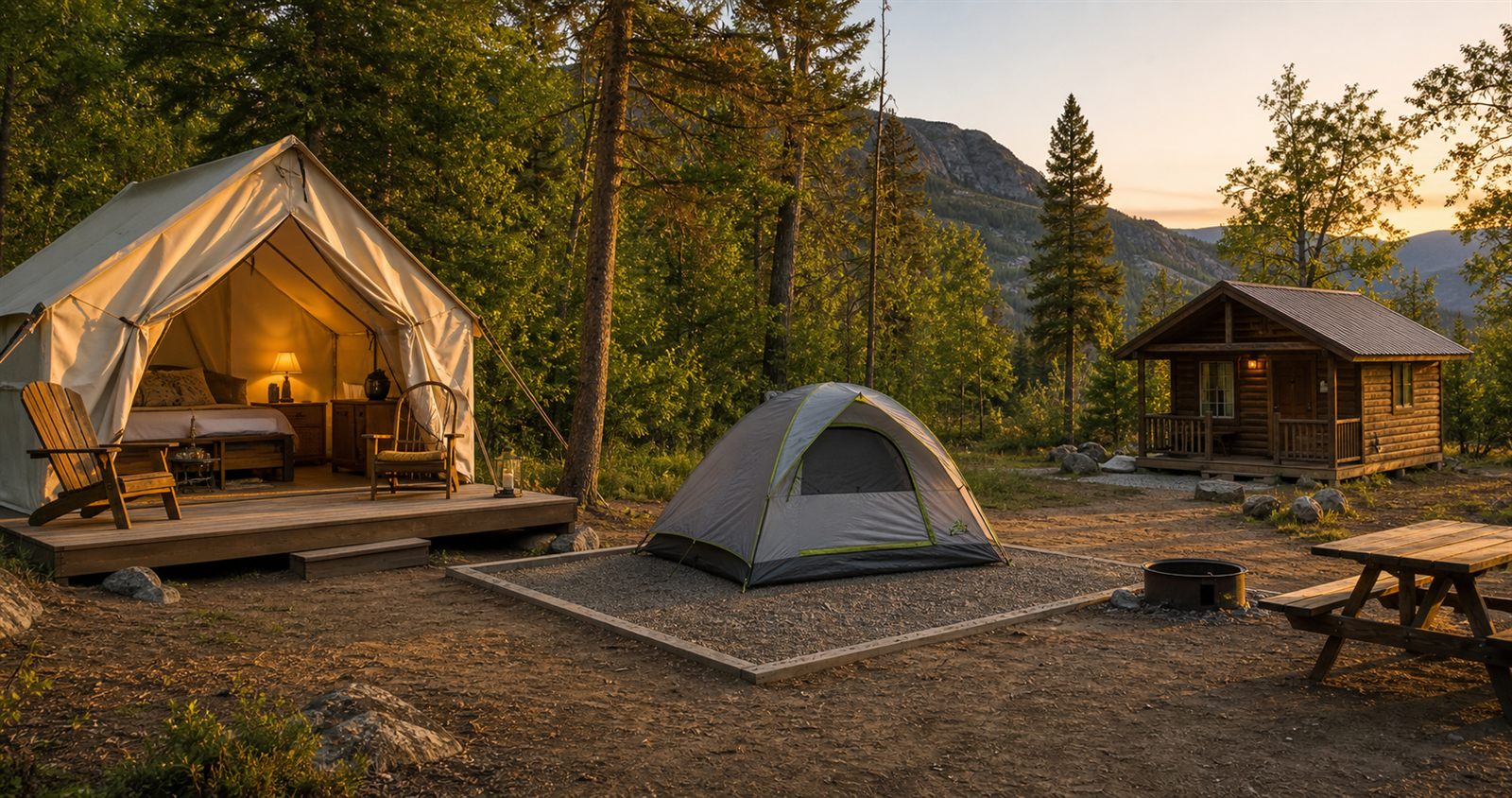
Your first outdoor trip does not have to prove anything. The best starting point is the stay you will actually enjoy, understand and feel prepared to repeat. For some people that is a simple tent site. For others it is a canvas glamping tent with a real bed, or a cabin that keeps the weather mostly outside while still putting you near trails, campfires and quiet mornings.
This guide compares glamping, tent camping and cabin stays for US beginners. It is research-only, uses no affiliate links and does not claim that Trail Gear Review tested a specific campground, cabin or glamping property.
The Short Answer
Choose glamping if you want outdoor atmosphere with less shelter setup and less gear buying. Choose tent camping if you want the most hands-on version of camping and are willing to learn shelter, sleep, cooking and weather routines. Choose a cabin if your first priority is a more stable sleeping space, easier weather buffer or a mixed-comfort group.
If you are unsure, start with the option that removes your biggest blocker:
- Worried about sleeping badly or buying gear too soon? Start with glamping or a cabin.
- Excited to learn the basic camping routine? Start with a developed tent campground.
- Bringing kids, reluctant adults or mixed comfort levels? A cabin can make the first trip easier.
- Planning to become a regular camper? Tent camping teaches the most transferable skills.
- Traveling in shoulder season, heat, wind or uncertain weather? Step up the shelter comfort.
The point is not whether one style is more authentic. The point is whether the trip matches your comfort level, weather, budget, gear access and tolerance for campsite chores.
Glamping vs Camping vs Cabin Stays: Quick Comparison
| Trip style | Best first-trip fit | Main comfort advantage | Main tradeoff | Gear burden |
|---|---|---|---|---|
| Glamping | Travelers who want nature with fewer setup chores | Often includes a pre-set shelter and better sleep setup | Can cost more and still requires rule/weather checks | Low to medium |
| Tent camping | Beginners who want to learn classic camping skills | Most flexible and hands-on | More exposure to weather, sleep discomfort and setup mistakes | Medium to high |
| Cabin stay | Families, cautious beginners or shoulder-season trips | Hard-sided shelter and simpler sleep logistics | Less tent-camping skill practice; amenities vary widely | Low to medium |
Outdoor travel has enough demand to make this choice worth thinking through. KOA’s 2026 Camping & Outdoor Hospitality Report says more than 52 million North American households camped in 2025, and the Outdoor Industry Association’s 2025 participation preview says gateway activities such as hiking, camping and fishing each gained more than 2 million new participants. In plain terms: a lot of people are entering outdoor travel through low-pressure trips, not advanced expeditions.
That is good news for beginners. You can start where you are.
Choose Glamping If You Want Outdoor Atmosphere With Less Setup
Glamping is usually the easiest choice when the idea of camping sounds appealing but sleeping on the ground, buying a full gear kit or setting up a tent in the dark sounds like too much for a first trip.
It often works well for:
- Couples trying an outdoor weekend before buying gear.
- Families who want a softer first step for younger kids.
- Travelers who care more about scenery and camp atmosphere than learning every camping skill immediately.
- People who want to avoid a poor first-night sleep while still spending time outside.
- Groups with one enthusiastic camper and one skeptical traveler.
The biggest advantage is friction reduction. You may still need to pack clothing, food, water, lights, toiletries and personal items, but you are not starting from an empty campsite. The lodging may already include a bed, a platform, furniture, lighting or cooking access, depending on the property.
The risk is assuming glamping means no planning. It does not. Before booking, verify:
- Whether bedding is included or rented separately.
- Whether there is heat, air conditioning, electricity or only basic lighting.
- Bathroom and shower access.
- Cooking rules, food storage rules and whether coolers are allowed.
- Parking distance from the unit.
- Pet rules.
- Fire rules and seasonal restrictions.
- Cancellation policy and check-in window.
Glamping can also blur into cabins, yurts, safari tents, tiny homes and unique lodging. Read the actual listing, not just the category label.
Choose Tent Camping If You Want the Most Hands-On First Trip
Tent camping is the clearest path if you want to learn the core camping routine: pick a site, pitch shelter, organize food, manage weather, sleep outside and pack down in the morning.
It works well for:
- Beginners who are excited to learn camping skills.
- People who already own or can borrow basic gear.
- Travelers planning future backpacking, car camping or public-land trips.
- Budget-conscious campers who will camp more than once.
- Anyone who wants the simplest bridge into gear guides and outdoor systems.
The tradeoff is that tent camping exposes small planning mistakes quickly. A tent that is too small, a sleeping bag that does not match the weather, a missing headlamp, poor food organization or a late arrival can make the first night feel harder than it needed to be.
NPS camping guidance is useful here because it keeps the basics grounded. NPS advises campers to match the trip to the setting, season, difficulty level and duration. Its What to Bring guidance also notes that a two-person tent means room for two people to sleep, not two people plus all their gear or pets, and that sleeping bags should match personal comfort, size and the expected weather.
If tent camping is your choice, start with a developed campground for the first trip. Then use Trail Gear Review’s weekend camping checklist for beginners to build the packing list.
For a first tent trip, keep the plan modest:
- One or two nights.
- Drive-up or easy walk-in site.
- Known bathroom and water access.
- Arrival before dark.
- Weather that does not require advanced judgment.
- Simple meals.
- No brand-new gear tested for the first time at midnight.
Tent camping teaches the most, but it asks the most from the beginner.
Choose a Cabin If You Want More Weather Buffer and Simpler Sleep
A cabin stay is often the best first outdoor trip for people who want trails, camp meals and evening quiet without making sleep and shelter the hard part.
It works well for:
- Families with kids or older relatives.
- Mixed-comfort groups.
- Travelers with a poor sleep tolerance.
- Shoulder-season trips when tent weather is uncertain.
- People who want to focus on hiking, cooking, photography or park exploring instead of shelter setup.
- Beginners who need a more controlled first step before tent camping.
Cabins are not all the same. Some are nearly full vacation rentals. Others are rustic bunkhouses with no bedding, no running water, no kitchen and a walk from the parking area. Recreation.gov lists camping and cabin experiences across federal recreation facilities, but individual facility pages set the real expectations.
Before booking a cabin, check:
- Beds, mattresses and bedding requirements.
- Heat, electricity and lighting.
- Water source and bathroom location.
- Cooking facilities or stove restrictions.
- Whether tents are allowed outside the cabin.
- Parking distance and road access.
- Cleaning requirements before checkout.
- Pet rules and occupancy limits.
- Whether you still need a cooler, sleeping bag, cookware or headlamp.
Cabins reduce some weather and sleep friction, but they do not remove outdoor planning. You still need to check conditions, pack layers, handle food safely and know the local rules.
Booking Checks Before You Commit
The biggest beginner mistake is choosing a lodging style from photos alone. A beautiful tent, cabin or glamping deck can still be a poor fit if the rules, weather or logistics do not match your group.
NPS advises campers to research permits and regulations, outdoor conditions, food storage and disposal rules, fire regulations and pet rules before a trip. That same logic applies whether you sleep in a tent, a glamping unit or a cabin.
Before paying, answer these questions:
- What exactly is included in the stay?
- What do you need to bring for sleep, food, water and lighting?
- Is potable water available?
- Are bathrooms close enough for your group?
- Are fires allowed, restricted or banned?
- What happens if weather changes?
- Can you arrive before dark?
- Are pets allowed?
- Are there quiet hours, generator rules or vehicle limits?
- Is the cancellation policy acceptable?
- Do you have a backup plan if the site feels wrong or conditions change?
Booking friction is real. The Dyrt’s 2026 camping report says more than half of surveyed campers had difficulty booking because campgrounds were full. If you are planning peak dates, compare more than one lodging option and keep a realistic backup.
For planning tools, Trail Gear Review’s guide to camping apps for planning, weather and offline maps can help you build a small pre-trip workflow. Still verify rules and conditions with the actual campground, park or booking platform.
The Beginner Decision Flow
Use this sequence if you are stuck between options.
1. Start With Your Biggest Discomfort
If the biggest issue is sleeping, choose a cabin or glamping. If the issue is cost or skill-building, consider tent camping. If the issue is weather uncertainty, consider a hard-sided cabin or reschedule.
2. Decide Whether You Want to Learn Gear Systems
Tent camping is the better teacher. It forces you to learn shelter, bedding, kitchen, water, lighting and packing routines. Glamping and cabins are better samplers. They let you enjoy the outdoor setting before deciding how much gear you want to own.
3. Match the Trip to the Group
One motivated adult can handle more uncertainty than a family with tired kids, a nervous first-timer and a long drive. Pick the lodging style that fits the least experienced person in the group.
4. Check Weather Before You Romanticize the Plan
The National Park Service recommends keeping a backup plan and not pushing through when weather, hazards, health issues or site conditions make the original plan unsafe. For beginners, that means the forecast matters more than the vision you had when you booked.
5. Make the First Trip Easy to Repeat
A successful first trip is one you would do again with small improvements. If the plan requires too much buying, driving, setup, risk or group negotiation, step down the complexity.
Common First-Trip Mistakes
The first mistake is thinking comfort level is a moral choice. Glamping is not failure. A cabin is not cheating. Tent camping is not automatically better. They are different ways to reduce or accept friction.
The second mistake is buying a full tent-camping kit before knowing whether you like the rhythm of camping. If you are uncertain, borrow gear, rent where available, or start with glamping or a cabin and keep notes about what you missed.
The third mistake is ignoring water and food. NPS says water is an important camping need and gives a rule of thumb of 2 liters per person per day or more, especially in hot climates. If potable water is not available, plan ahead. USDA FSIS outdoor food-safety guidance also supports planning meals and equipment before the trip, using cold sources for perishables, separating raw foods and practicing hand hygiene.
The fourth mistake is overloading the first night. Do not combine a new tent, new stove, unfamiliar campground, late arrival, complicated meal, uncertain weather and reluctant group into one trip. Change one or two variables at a time.
The fifth mistake is assuming the booking label tells the whole story. A cabin can be rustic. A glamping tent can still be cold. A tent site can be comfortable if the campground has good access, bathrooms and a calm forecast.
So Which First Outdoor Trip Fits You?
Choose glamping if you want a comfortable first taste of outdoor hospitality without learning every camping system at once.
Choose tent camping if you want the classic learning experience and are ready to manage shelter, bedding, food, water and weather more directly.
Choose a cabin if you want a more protected basecamp, a mixed-comfort group solution or a first trip that prioritizes sleep and weather buffer.
After the first trip, the next step becomes clearer. Glamping may show you that you want your own tent. Tent camping may show you that a better sleeping bag matters. A cabin may show you that your group loves outdoor days but wants a real bed at night.
That is useful information. The right first trip is the one that helps you come home with enough confidence to plan the next one.