

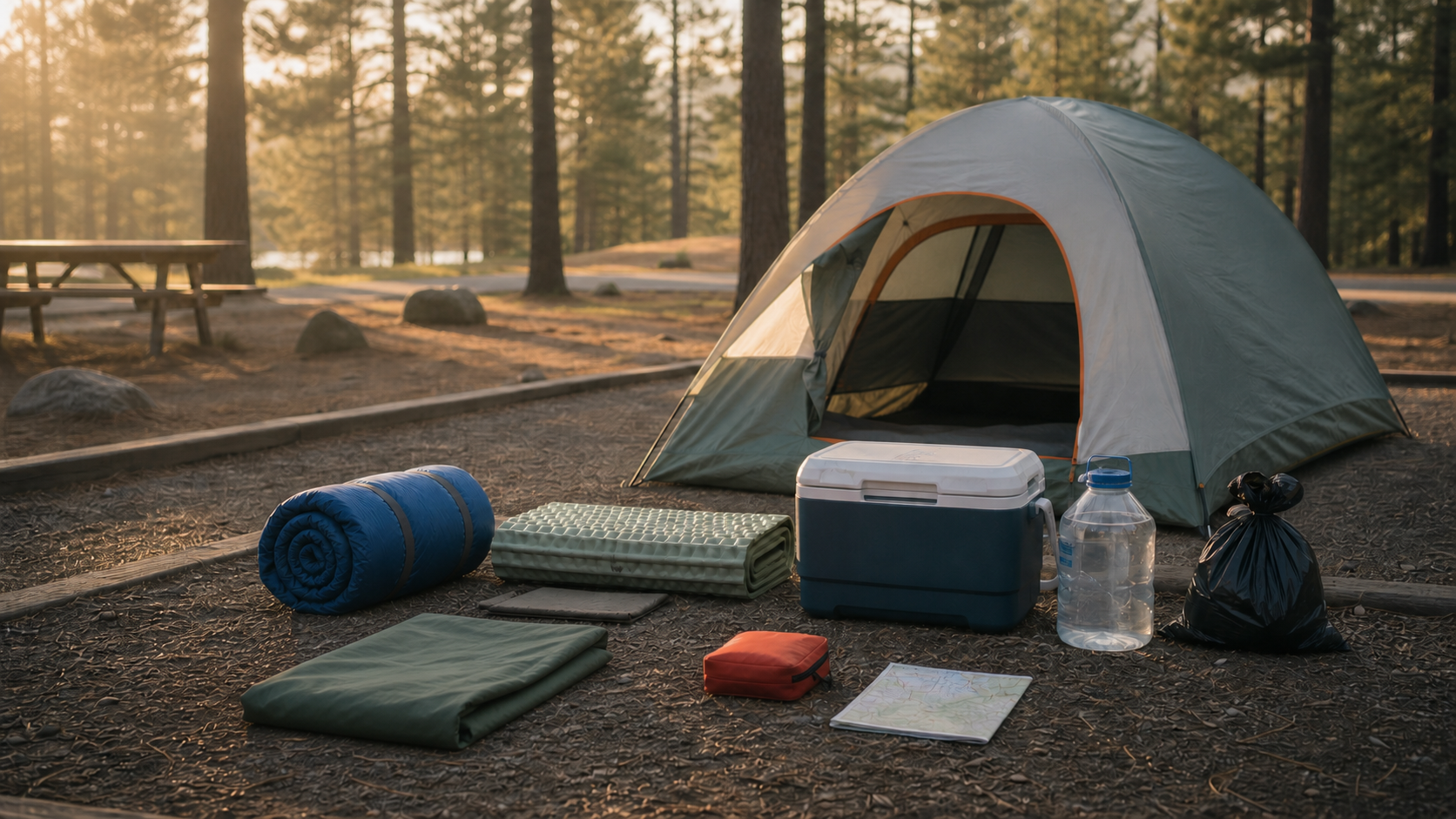
A first trip works better when you build your plan around a clear budget, then build gear around the plan. A research-first sequence helps beginners reduce risk and avoid expensive impulse purchases.
This guide keeps the focus simple: decide your campsite and route scope, confirm rules and weather context, then buy the smallest safe set of essentials for your first outing.
Gen Z readers often start from a strong goal with a tight budget. The framework below keeps that goal realistic and avoids overbuying before basics are set.
Start with a Budget Baseline, Not a Gear Instagram Shot
Before checking product pages, assign your budget to five buckets:
- campsite and access costs (fees, permits, reservations).
- transport, fuel, and distance risk.
- food and hydration plan.
- gear you already own vs gear you need to buy before departure.
- weather or safety contingency reserve.
This reduces one common mistake: buying category by category without a destination context.
For a first trip, define a ceiling for each bucket and keep your plan inside it.
Plan the Trip Before the Kit
Start with three decisions:
- where you can legally stay,
- what route and duration are realistic,
- what your backup options are if weather or access changes.
Official campsite guidance consistently emphasizes that reservation processes, access rules, and amenities differ by site. Check the exact page for each destination.
Practical sequence for first trips:
- Pick your primary site type (private, national park, state facility, or managed public land).
- Pick one backup site within a short range.
- Set your departure timing and one weather contingency.
That sequence keeps the trip realistic and prevents cost drift from last-minute substitutions.
Borrow, Rent, Then Buy: A Safer Money Order
For first-time camping, this purchase order is usually the lowest-risk starting point:
- Borrow shared gear where possible.
- Rent specialty items only for a short, known use case.
- Buy used gear with obvious condition checks.
- Buy new only where needed for your planned conditions.
This does not mean doing without quality. It means spending where it reduces risk first, and leaving optional upgrades for later trips once usage is clear.
What to Buy First, What to Delay
Buy first:
- Map and safety checklist,
- navigation backup that works offline,
- weather-capable outerwear and sleep layer strategy,
- food and hydration planning system,
- one legal and practical communications backup plan.
Delay:
- nonessential convenience accessories,
- duplicate comfort items,
- premium optional upgrades.
That rule protects your first trip from becoming an unplanned “starter inventory project.”
Safety and Rule Checks You Cannot Skip
For beginners, the highest-cost mistakes are often rule or safety misses. Verify these before departure:
- campsite and reservation status,
- fire and stove restrictions,
- food storage requirements where wildlife and heat are concerns,
- current weather alerts, road conditions, and closure notices.
Official channels are the source of truth for these conditions, and rules should be treated as location-specific rather than universal.
Use a One-Page First-Trip Checklist
Keep this in a note and check it in sequence:
- Destination and campsite rules confirmed.
- Fuel, weather, and access backups confirmed.
- Borrow/rent list finalized before purchases.
- Food safety and storage plan confirmed.
- Contact/sharing plan shared with a trusted person.
- Exit and emergency fallback options written down.
Simple systems beat expensive improvisation.
Common Overbuying Traps
The biggest risk for first trips is buying for a future trip while planning for a first one. Common traps include duplicate carry items, unsupported premium upgrades, and buying too much comfort gear before route and rules are fixed.
A stronger path is iterative: run this first outing with a minimal functional stack, then add only what you actually needed.
Internal Resource Links
If helpful, add this Trail Gear Review context as a deeper follow-up:
- Weekend Camping Checklist for Beginners
- How Much Portable Power Do You Need for Camping?
- How to Camp When Campgrounds Feel Too Crowded
The final step is not a perfect gear haul. It is a controlled, safe first trip plan with rules checks in place.