

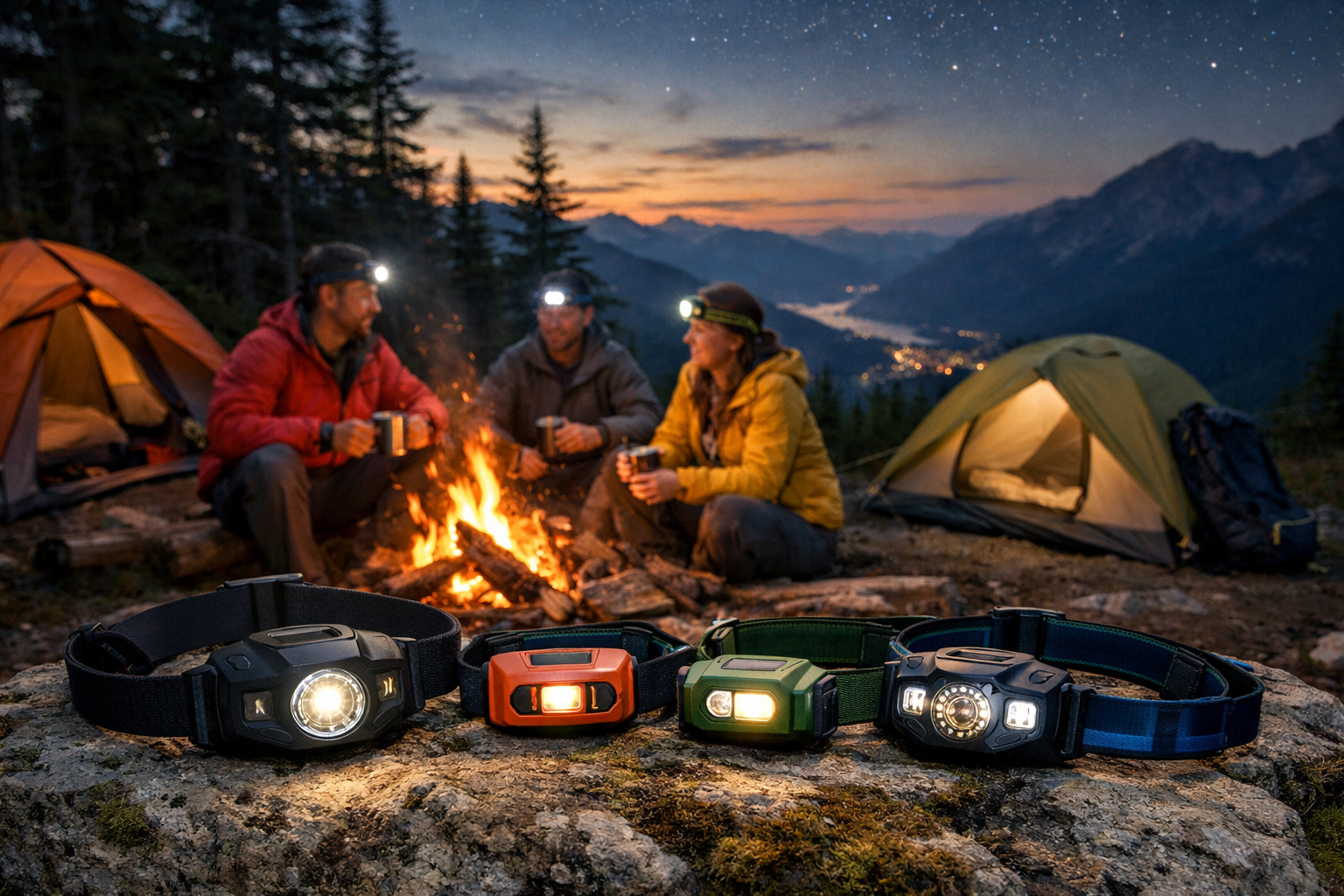
The best camping headlamp is bright enough for walking after dark, comfortable enough to wear around camp, weather-resistant enough for rain, and easy to power for the length of your trip. For most campers and hikers, that means choosing by use case: simple campsite lighting, trail movement, wet-weather reliability, ultralight backup, or higher-output route finding.
This 2026 refresh is research-based, not a product test. It replaces the previous affiliate-led product blocks with manufacturer-sourced specs, keeps the existing URL, and avoids hands-on claims. The National Park Service lists illumination as one of the Ten Essentials and recommends headlamps because they keep your hands free; it also reminds hikers to pack extra batteries.
Quick Answer: Which Headlamp Fits Camping or Hiking?
If you want one simple camp-and-trail light, start with a mid-output headlamp in the 300- to 600-lumen range, a lockout mode, usable low mode, and a battery plan you trust. A rechargeable model is convenient for weekend trips. A hybrid model that can also take standard batteries is useful when recharging may be uncertain.
| Best fit | Research-based example | Why it fits |
|---|---|---|
| General camping and hiking | Black Diamond Spot 400 | 400-lumen output, IPX8 rating, and dual-fuel battery support. |
| Rechargeable hiking and backpacking | Petzl ACTIK CORE | 625-lumen max output, 88 g weight, and CORE rechargeable battery with AAA compatibility. |
| Active hiking or trail running crossover | BioLite Dash 450 | 450-lumen output, 78 g weight, USB-C charging, and a balanced front/rear layout. |
| High-output wet-weather routes | Fenix HM65R-T | 1500-lumen max output, dual spotlight/floodlight setup, and 18650 rechargeable battery. |
| Ultralight backup or minimalist kit | Nitecore NU20 Classic | 360-lumen max output, 38 g weight, USB-C charging, and IP66 dust/water resistance. |
These are not affiliate picks and there are no buy buttons here. Treat the list as a sourced comparison of current specs, then confirm the latest product page before you purchase.
Headlamp Comparison Table
| Model | Max output | Weight | Battery setup | Water/dust rating | Practical use case |
|---|---|---|---|---|---|
| Black Diamond Spot 400 | 400 lm | 86 g with AAA, 72 g with BD 1500 battery | 3 AAA or BD 1500 rechargeable battery | IPX8 | General camping, hiking and wet-weather backup. |
| Petzl ACTIK CORE | 625 lm with CORE battery | 88 g | CORE rechargeable battery or 3 AAA/LR03 batteries | IPX4 | Rechargeable hiking and trekking with a hybrid fallback. |
| BioLite Dash 450 | 450 lm | 78 g | 1000 mAh rechargeable lithium-ion, USB-C | IPX4 | Active hiking, running and lightweight camp use. |
| Fenix HM65R-T | 1500 lm | 91 g excluding battery | Included 18650 rechargeable Li-ion battery or two CR123A batteries | Manufacturer page lists impact resistance and rugged construction; confirm exact rating before purchase. | High-output trail use where brightness matters more than minimum weight. |
| Nitecore NU20 Classic | 360 lm | 38 g | Built-in 500 mAh rechargeable battery, USB-C | IP66 | Ultralight backpacking, backup lighting and minimalist emergency kits. |
Spec tables are useful, but they do not tell the whole story. A camp headlamp needs a usable low setting for close tasks, a comfortable headband, a battery plan, and controls that will not turn on inside your pack.
Research Notes on the Shortlist
Black Diamond Spot 400
The Black Diamond Spot 400 is the most straightforward all-around example in this refresh. Black Diamond lists a 400-lumen max output, proximity and distance modes, red night vision, dimming, strobe, brightness memory, lock mode, and a dual-fuel setup that can use either three AAA batteries or the rechargeable BD 1500 battery.
The key camping advantage is flexibility. If you already carry AAA batteries for other gear, the Spot 400 can fit that system. If you prefer rechargeable power, the BD 1500 route keeps it from being a disposable-battery-only lamp. Black Diamond also lists an IPX8 rating, with a note that the lamp should be dried after wet use.
Best fit: campers and hikers who want one general-purpose headlamp with a strong weather-resistance spec and flexible battery options.
Petzl ACTIK CORE
The Petzl ACTIK CORE is a strong rechargeable hiking option because Petzl lists 625 lumens, an 88 g weight, a mixed beam for close and distance vision, red lighting, lock function, and HYBRID CONCEPT battery support. It ships with the CORE rechargeable battery and can also work with three AAA/LR03 batteries.
That hybrid setup is useful for weekend hikers who usually recharge at home but want a backup option for longer trips. Petzl lists IPX4 weather resistance, which is appropriate for rain exposure but not the same as a submersion rating. Petzl also notes that its bike mount use is not a substitute for required standardized road lights.
Best fit: hikers and backpackers who want a rechargeable primary headlamp with standard-battery fallback.
BioLite Dash 450
The BioLite Dash 450 is built around active movement. BioLite lists 450 lumens, 78 g total weight, USB-C charging, a 1000 mAh lithium-ion battery, IPX4 water resistance, 3 hours of burn time on high, 60 hours on low, and a spot beam distance of 90 m.
The main reason to consider it for hiking is weight distribution. BioLite places the power supply at the back of the head rather than putting all the mass on the forehead. That does not automatically make it better for every camper, but it is a practical design difference if you hike or run with a headlamp for longer stretches.
Best fit: active hikers, runners and campers who value a light, balanced rechargeable design.
Fenix HM65R-T
The Fenix HM65R-T is the high-output option in this sourced set. Fenix lists a 1500-lumen maximum output from independently controlled spotlight and floodlight LEDs, a 170 m max beam distance, a 300-hour max runtime, a magnesium alloy body, and 91 g weight excluding the battery. It uses an included 18650 rechargeable Li-ion battery or two CR123A batteries.
For normal campground use, this is more light than many people need. Its role is different: demanding trail movement, rough weather windows, route finding, or users who want separate flood and spot beams. Because high-output headlamps can be heavier and more expensive, beginners should not treat maximum lumens as the only buying metric.
Best fit: users who need more output and beam control than a basic camp headlamp provides.
Nitecore NU20 Classic
The Nitecore NU20 Classic is the minimalist option. Nitecore lists a 360-lumen max output, 109 m beam distance, 38 g weight, USB-C charging, a built-in 500 mAh battery, lockout mode, 1 m impact resistance, and IP66 dust/water resistance.
The tradeoff is battery format. A tiny built-in battery keeps weight down, but it does not give you the same field battery swap as a hybrid AAA-compatible lamp. That makes the NU20 Classic a better fit as an ultralight primary for short trips, a backup light, or part of a minimalist backpacking kit where every gram matters.
Best fit: ultralight hikers, backup lighting kits and campers who want very low weight.
How to Choose a Camping or Hiking Headlamp
Start with brightness, but do not stop there. A 400-lumen headlamp can be plenty for ordinary camp chores and moderate night walking, while higher-output models help when you need longer throw, more route visibility, or a stronger spot beam. Very high output also tends to drain batteries faster on max settings, so runtime and low-mode usability matter.
Battery type is the next major decision. Rechargeable headlamps are convenient when you can top them off before a trip or recharge from a power bank. Hybrid headlamps are useful when you want rechargeable convenience plus the option to carry standard batteries. Built-in ultralight rechargeable lamps save weight but make battery swaps harder.
Water resistance should match the trip. IPX4 is commonly used for rain and splash resistance. IPX8 indicates a stronger water-resistance standard, but the manufacturer’s care notes still matter. IP66, as listed by Nitecore for the NU20 Classic, adds dust protection and resistance to splashes/rain, but it is not a reason to ignore product instructions.
Comfort is practical, not cosmetic. A headlamp that bounces, pinches, or puts too much weight on the forehead may be annoying during a night hike even if the spec sheet looks strong. For camp chores, a lower, warmer or wider beam can be more useful than a narrow high-output spot.
Controls also matter in real use. A lockout mode helps prevent accidental activation in a pack. A battery indicator helps avoid surprise failure. Red light can be useful around camp when you want less glare, but it should not replace a white beam for route finding.
For charging planning, see Trail Gear Review’s guide to how much portable power you need for camping.
Headlamp Packing Checklist
Pack the headlamp before sunset, not after you need it. The NPS Ten Essentials guidance treats illumination as a preparedness category and recommends extra batteries. For a camping or hiking trip, that means the headlamp is part of the safety kit, not just a convenience item.
Use this quick checklist:
- Headlamp for each person, not just one shared light.
- Spare batteries, backup battery pack, or a confirmed recharge plan.
- Lockout mode enabled before packing if the model supports it.
- Low mode checked for tent, cooking and map-reading tasks.
- Weather resistance matched to the forecast and route.
- Backup light for longer hikes, late starts or remote trips.
- Offline map or route backup if you may be out after dark.
- First-aid kit and weather layers packed with the rest of the Ten Essentials.
For a broader first-trip packing pass, use Trail Gear Review’s weekend camping checklist for beginners. If you are planning hikes away from camp, the guide to camping apps for planning, weather and offline maps can help you build a navigation backup.
Sources and Method
This refresh uses supplied GSC/GA4 baseline data for the update rationale and manufacturer or official safety sources for article claims. It does not include affiliate links, retailer shortlinks, product-testing claims, star ratings or hands-on rankings.
Official and manufacturer sources: