

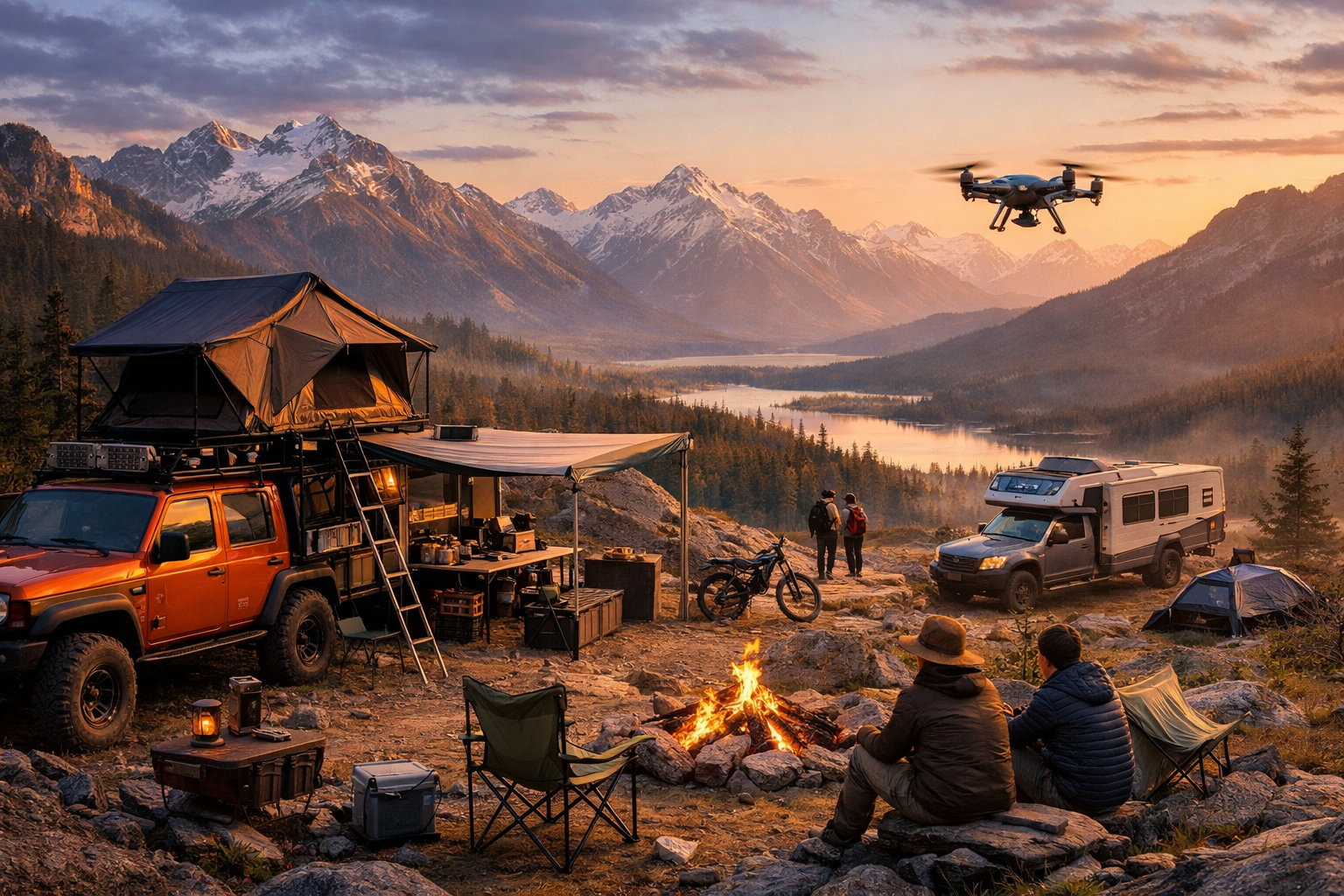
The biggest overlanding gear trends for 2026 are less about flashy builds and more about practical systems that make trips easier to plan, power and repeat. Campers are moving toward lighter vehicle setups, portable power, offline navigation, modular storage, compact cooking gear and equipment that works across weekend camping, road trips and public-land overlanding.
That shift matters because the search intent around this topic is specific: people are not just asking what is trendy. They want to know which changes affect the gear they should buy, pack or skip before the next trip. Here are the outdoor and overlanding trends most likely to shape 2026 planning.
1. Lighter overlanding setups are replacing oversized builds
Many new overlanders are moving away from heavy, permanent vehicle builds and toward lighter camping systems that can be installed, removed or rearranged as needed. Instead of building a full-time expedition rig, more drivers are using folding sleep platforms, soft storage, compact recovery gear and basic kitchen boxes that fit inside SUVs, trucks and crossovers.
This trend makes sense for beginners. A lighter setup costs less, keeps the vehicle easier to drive every day and leaves room to learn what kind of camping actually fits your trips. If you are still early in the process, pair this article with our guide to planning an overlanding route on public lands before investing in permanent upgrades.
2. Portable power is becoming a core camping system
Portable power is one of the clearest overlanding gear trends for 2026. Phones, GPS apps, cameras, lights, fridges and emergency communication tools all need reliable charging. For many campers, a battery power station and portable solar panel are now part of the basic camp system rather than a luxury upgrade.
The practical question is not “how much power can I buy?” It is “what do I actually need to run?” A weekend camper charging phones and lights needs a very different setup than someone powering a 12V fridge for several days. For more context, see our guides to portable power stations for camping and portable solar panels for camping and overlanding.
3. Offline navigation is moving from backup plan to default habit
Offline maps are becoming a standard part of overlanding preparation. More travelers now download maps, save routes and check land-management boundaries before leaving cell coverage. That habit is especially important for public-land trips, forest roads and dispersed camping areas where service can disappear quickly.
The best 2026 navigation setup is usually layered: a phone app with offline maps, a paper or PDF backup, saved waypoints and a route plan that includes fuel, water and exit options. If your current process depends on live signal, start with our offline navigation guide for camping and overlanding.
4. Modular storage is beating one-size-fits-all gear boxes
Another camping trend for 2026 is modular storage. Rather than packing everything into one large bin, campers are splitting gear into smaller systems: cooking, sleep, recovery, power, tools and personal items. This makes it easier to load the vehicle, find what you need at camp and remove gear when the vehicle goes back to daily use.
Modular packing also helps prevent overpacking. If a trip is only one night, you may not need the full recovery kit, large kitchen setup or extra power system. For shorter trips, a focused checklist like our weekend camping checklist for beginners is often more useful than a giant expedition packing list.
5. Camp kitchens are getting smaller, faster and easier to clean
Outdoor cooking gear is becoming more compact and practical. Instead of building large kitchen drawers or carrying complicated cookware, many campers are choosing simple stove setups, nesting pots, smaller prep surfaces and food systems that reduce cleanup. The goal is not to recreate a home kitchen outside. It is to make meals reliable without consuming the whole evening.
This trend pairs with the rise of shorter trips. A two-night overlanding route does not need the same kitchen as a two-week expedition. If your current setup feels slow or cluttered, review what you actually cook and simplify around those meals.
6. 12V fridges are becoming more common, but not always necessary
12V camping fridges continue to gain attention because they reduce ice runs, keep food organized and work well with portable power systems. For longer overlanding routes, a fridge can be a major comfort upgrade. For short weekend trips, though, a cooler may still be simpler and cheaper.
The trend is not that everyone needs a fridge. The trend is that more campers are thinking about food storage as part of the full electrical system. If you are comparing options, start with our guide to 12V camping fridges for overlanding and road trips.
7. More campers are choosing multi-use gear over specialized gear
The strongest 2026 outdoor gear trend is versatility. Campers want equipment that works for car camping, hiking, overlanding and road trips instead of gear that only fits one narrow scenario. Multi-use headlamps, sleeping pads, compact packs, layered clothing and simple shelters all support this direction.
This is especially useful for beginners because it reduces duplicate purchases. Before buying a specialized item, ask whether it solves a real problem on your trips or just looks good in someone else’s setup.
What these 2026 trends mean for your next trip
The best takeaway from the 2026 overlanding trends is simple: build around repeatable trips, not fantasy scenarios. Start with the route, weather, water, food, sleep and navigation needs. Then choose gear that makes those basics easier.
For most campers, that means a lighter vehicle setup, reliable offline maps, a realistic power plan, organized storage and a short list of gear that earns its place on every trip. The future of overlanding is not just bigger rigs. It is smarter packing, better planning and equipment that helps you get outside more often.