

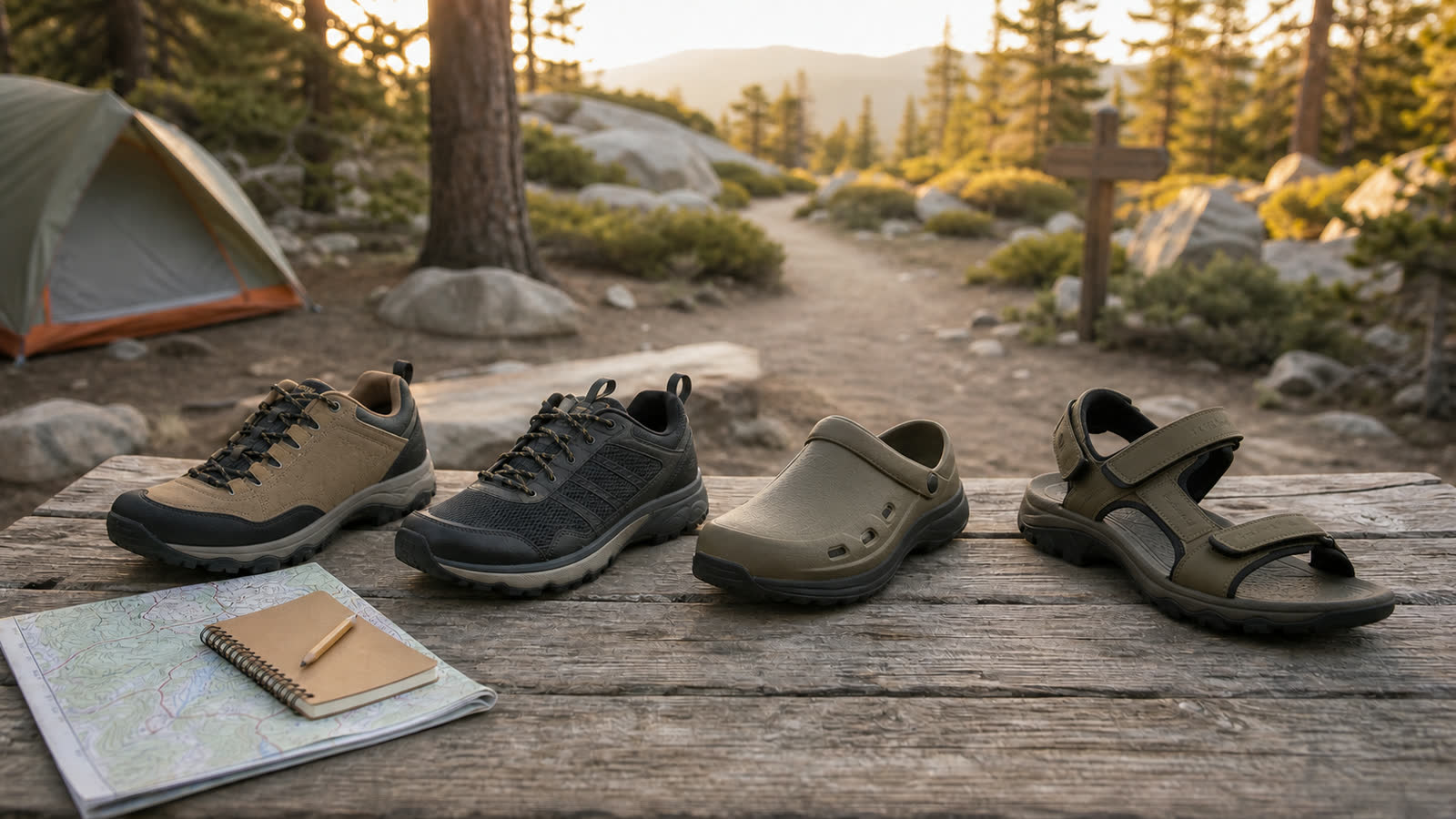
For weekend camping plus short hikes, start with one trail-capable shoe, then add a separate camp shoe only if comfort, water, showers or evening chores make the extra pair worth the space. Hiking shoes work for many short trails, trail runners fit lighter and faster outings, camp shoes are mainly for campsite comfort, and sandals need the right terrain and secure traction.
This research-only guide does not rank products or claim Trail Gear Review tested any footwear. It uses source-backed category guidance so you can match your shoes to the trail surface, pack weight, weather and camp routine.
The Short Answer
If the trip includes dirt, gravel, roots, rocks or any uneven trail, do not make flip-flops or loose camp sandals your primary hiking footwear. The National Park Service Hike Smart guidance says heels, open-toed shoes and flip-flops are not ideal for hiking, and points to sturdy rubber-soled hiking boots for dirt and gravel trails.
For a normal campground weekend with short, maintained trails, many readers can build the footwear plan this way:
- Wear hiking shoes or trail runners as the main walking shoe.
- Choose more structure if the trail is rocky, wet, steep or loaded with a heavier pack.
- Pack camp shoes only for comfort around the campsite, showers, easy errands or giving your main shoes time to dry.
- Use hiking sandals only when they have secure straps, traction and terrain that fits the sandal.
- Bring moisture-wicking socks that match the shoe and the expected weather.
Quick Comparison: Trail Shoe, Runner, Camp Shoe or Sandal
| Footwear type | Where it fits best | Watch-outs |
|---|---|---|
| Hiking shoes | Short day hikes, groomed trails, light to moderate terrain and general campground walking | Less ankle coverage than boots; match tread and structure to the trail. |
| Trail runners | Light, dry, faster or more casual short hikes where comfort and low weight matter | Less structure than many hiking shoes; not the default for heavy loads or rugged routes. |
| Camp shoes | Campsite comfort, shower walks, easy chores and letting main shoes breathe | Not a shortcut for real hiking unless they also meet trail-traction and support needs. |
| Hiking sandals | Hot days, flat terrain, water-adjacent use and short low-consequence walking | Avoid loose sandals, flip-flops and open footwear on rough, loaded or gravel-heavy trails. |
| Hiking boots | Rougher terrain, heavier packs, colder/wetter conditions or trips where more structure matters | Heavier, often warmer and less breathable; many need break-in. |
The American Hiking Society footwear guide describes trail runners as lighter, sneaker-like footwear with better tread for trail running or light hikes, while trail shoes are low-cut but stiffer and more supportive for easy to moderate hiking. That is the core difference: a trail runner prioritizes light movement, while a hiking shoe usually adds more hiking structure.
Start With Terrain, Load and Weather
Footwear labels matter less than the trip. REI’s hiking footwear guidance frames the choice around duration, distance, terrain and load. Light, groomed terrain can suit lighter hiking or trail-running shoes, while rugged terrain with steep grades, obstacles and unpredictable surfaces calls for more structure. Heavier loads also push the choice toward more supportive footwear.
Use these questions before deciding:
- Is the trail paved, groomed, dirt, gravel, rocky, muddy or steep?
- Are you carrying only a daypack, or a heavier overnight pack?
- Will you hike in heat, rain, cold, water crossings, snow or slick mud?
- Do you need toe protection from rocks or campsite debris?
- Will your feet swell during the day?
- Can your main shoes dry overnight if they get wet?
If your hike is short but your pack is heavy, treat it more like a support problem than a distance problem. Trail Gear Review’s guide to hiking backpack fit and load support is a useful companion when pack weight starts changing your footwear needs.
Hiking Shoes: The Default for Many Short Hikes
For many weekend campers, hiking shoes are the clean middle ground. REI describes hiking shoes as lower-cut footwear with durable uppers and moderately flexible midsoles, generally suited to day hiking on groomed, paved or urban trails and light to moderate terrain at a relaxed to moderate pace.
That makes them a practical default when your trip looks like this:
- developed campground or car-camping site
- short day hikes on maintained trails
- light daypack rather than a heavy backpacking load
- dry or mixed weather where breathability matters
- campsite walking where you still want a protective closed shoe
A hiking shoe is not automatically safer than every trail runner or boot. It still needs the right fit, tread, stiffness and comfort for your feet and the surface under you. But as a category, it often gives casual campers more protection than a sneaker and less bulk than a heavier boot.
Trail Runners: Light and Comfortable, With Tradeoffs
Trail runners can make sense for short hikes when the trail is light to moderate, the pack is small and you value low weight, flexibility and comfort. REI describes trail-running shoes as lighter and more flexible than hiking shoes, generally best suited to light to moderate terrain depending on outsole design.
They are worth considering when:
- the route is short, dry and maintained
- you are carrying a light daypack
- you prefer flexible, low-cut footwear
- you already know the shoe fits without rubbing
- you do not need high ankle coverage or heavy underfoot structure
They are less convincing when the trip includes sharp rocks, rough descents, mud, snow, heavy loads or unfamiliar off-trail travel. In those cases, the support and protection question matters more than the shoe weight.
Camp Shoes: Comfort Around Camp, Not a Trail Shortcut
Camp shoes are the optional second pair. They are useful when you want to take off damp or tight trail shoes after the hike, walk to the bathhouse, step out of the tent at night, cook at a picnic table or move around camp without staying in your main hiking footwear.
They are not automatically hiking shoes. If your camp shoe is a loose slide, soft clog or minimal sandal, treat it as campsite comfort, not trail equipment. If you plan to use one pair for both camp and a short walk, it still needs the same basics the sources emphasize for hiking footwear: secure fit, traction and enough protection for the surface.
Camp shoes make the most sense for:
- campground showers or bathhouse walks
- wet main shoes that need time to dry
- warm evenings when your feet need a break
- low-risk campsite chores on flat ground
- car camping where extra bulk is not a problem
They make less sense when you are packing light, moving camp every day, staying on rocky ground, camping in cold weather or trying to use a very flimsy shoe for actual hiking. For campsite behavior beyond footwear, Trail Gear Review’s Leave No Trace camping checklist is a good companion.
Hiking Sandals: Useful in Hot or Wet Conditions, Limited on Rough Trails
Hiking sandals can work, but the details matter. REI’s what-to-wear hiking guidance says hiking sandals can be a lightweight, breathable option for water crossings or hot days on flat terrain, and advises looking for support, grippy traction and a snug strap system.
That puts sandals in a specific lane:
- hot-weather campsite walking
- short flat walks where the footing is predictable
- water-adjacent use where a closed hiking shoe may stay wet
- easy campground errands or recovery time after the hike
They are not the same as flip-flops. The NPS warning about open-toed shoes and flip-flops is important because many trails have gravel, loose dirt, roots, sharp rocks or sudden grade changes. If the route is rugged, loaded, cold, slick or unfamiliar, default to a more protective trail shoe, hiking shoe or boot.
Fit and Socks Matter More Than the Label
A good category choice can still fail if the shoe fits poorly. The American Academy of Dermatology’s blister-prevention guidance says moisture-wicking socks can help protect feet and that shoes should not be too tight or too loose.
REI’s footwear guide adds a similar fit rule for hiking footwear: snug everywhere, tight nowhere, with room to wiggle your toes. It also recommends trying on footwear later in the day, when feet may be larger, and breaking in bulkier boots or shoes before the first trip.
For weekend campers, the practical fit checklist is simple:
- Try shoes with the socks you plan to wear.
- Check toe room on descents, not only on flat floor.
- Look for heel lift, pinching, seams or hot spots.
- Walk stairs, ramps or uneven surfaces before committing.
- Break in stiffer shoes before the camping weekend.
- Pack a backup sock pair if the hike or campsite may be wet.
The NPS Hike Smart page also calls out thick wool or synthetic moisture-wicking socks for longer hikes. Do not let the shoe choice do all the work; socks, fit and foot care are part of the same system.
Simple Weekend Footwear Setups
Use these examples as starting points, then adjust for your feet and the exact trail.
Developed Campground Plus Short Maintained Trail
Pack or wear hiking shoes. Add camp shoes only if you want shower footwear or evening comfort. A trail runner can also work if the trail is light and the fit is proven.
Warm Campground With Flat Water-Adjacent Walking
Use hiking shoes or trail runners for the main trail. Add secure hiking sandals for water-adjacent camp chores if the terrain is flat and low consequence.
Rocky Trail or Heavier Daypack
Move toward a more structured hiking shoe or hiking boot. If the pack is heavy, consider the load first and the shoe weight second.
Rainy Weekend or Muddy Campsite
Prioritize traction, drying plan and sock changes. A waterproof boot may help in some conditions, but breathable footwear plus dry socks may be better in warm weather. Avoid assuming a wet sandal is safe on slippery dirt or rock.
Minimal Packing Trip
Choose one trail-capable shoe that can handle both hiking and camp. Skip the second pair unless you have a shower, water, foot-care or drying reason.
For broader gear planning, pair this article with the Trail Gear Review weekend camping checklist for beginners and the camping and hiking headlamp guide.
Final Checklist
Before you leave, check the footwear plan against the actual trip:
- Main shoe has enough traction for the trail surface.
- Main shoe fits with the socks you will wear.
- Toes have room on downhill walking.
- Heels do not lift or rub during a test walk.
- Socks are wool or synthetic moisture-wicking material for longer hikes.
- Camp shoes are optional comfort footwear, not your default trail shoe.
- Sandals have secure straps and traction if you plan to walk beyond camp.
- Open-toe or loose footwear stays off dirt, gravel or rugged trails.
- Wet-weather plan includes dry socks or a way to let shoes dry.
- New or stiff shoes have been worn before the trip.
The right camping shoe is not the shoe with the loudest claim. It is the shoe that matches your trail, your load, your weather, your campsite and your feet.