

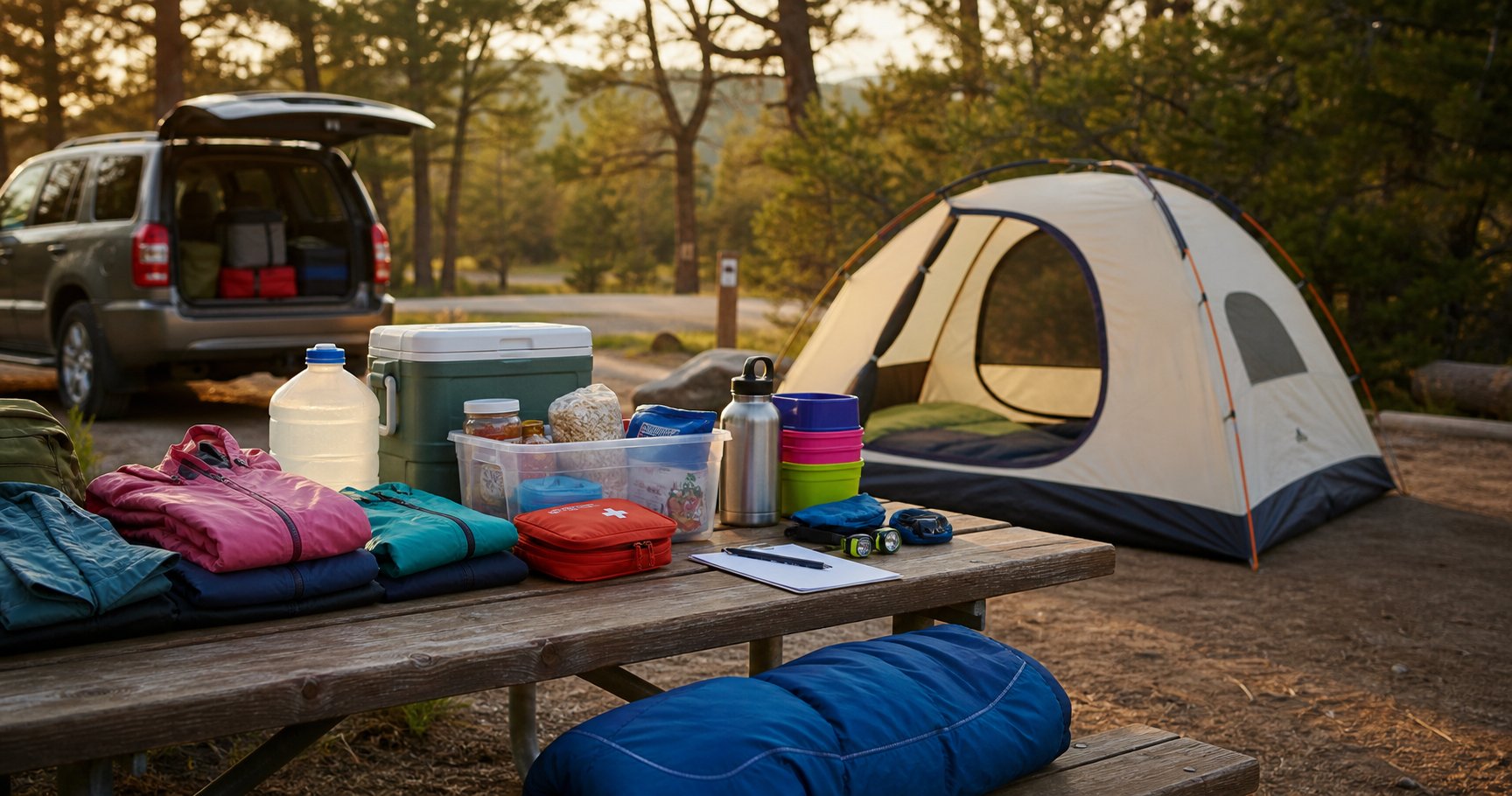
Your first family camping trip does not need a huge gear haul. It needs a short plan, a realistic campground, enough sleep comfort, simple food, water, weather layers, health basics and a few campsite routines your kids can understand.
This family camping checklist is written for parents planning a first frontcountry campground trip in the United States. It is research-based, does not include affiliate links and does not claim that Trail Gear Review tested the gear in this article. Before you leave, confirm the current rules, weather, fire restrictions, food-storage requirements and amenities for your exact campground.
Quick Answer: The Family Camping Essentials
For a first trip, pack around the routines you will repeat all day:
- Sleep: tent, ground protection, sleeping pads, sleeping bags or blankets matched to the forecast, pillows, pajamas and one familiar comfort item per child.
- Food and water: water bottles, a water jug, simple meals, snacks, cooler and ice or frozen gel packs for perishables, cooking kit, eating kit, cleanup kit and trash bags.
- Clothing: layerable clothes, rain jackets, warm sleep layers, spare socks, extra kid outfits, sun hats and closed-toe shoes.
- Safety and health: first-aid kit, sunscreen, insect repellent, medications, child-safe headlamps or flashlights, extra batteries, whistle routine and emergency contacts.
- Camp routine: reservation details, directions, offline backup, campground rules, fire plan, food-storage plan, bathroom plan, quiet-hours plan and a bad-weather exit plan.
- Kid comfort: simple activities, books, small toys, a camp chair or sit pad, easy bedtime routine and downtime.
Parents usually overpack big gear and underpack routine items. Think through bedtime, the first breakfast, bathroom walks after dark, wet shoes, hungry kids, sunscreen reapplication, handwashing and what you will do if the weather turns.
Start With a Short, Easy First Trip
The easiest first family camping trip is usually not the most remote one. The National Park Service describes frontcountry camping as established campground camping where visitors drive to a campground, often with amenities such as restrooms, potable water, picnic tables, fire rings and sometimes food-storage boxes. Those amenities vary by park and campground, so verify them before you count on them.
For beginners with kids, Recreation.gov recommends looking for helpful campground features such as potable water, flush toilets, tent pads, picnic tables, fire pits, food boxes and campground hosts. It also recommends checking fire restrictions, weather, closures, fire activity and local conditions before the trip. That is the parent-friendly starting point: choose a campground that reduces avoidable friction.
Keep the first trip short. One or two nights close enough to home or town gives you room to learn without making every forgotten item a crisis. NPS also reminds parents that camping with kids may not go exactly as planned. Mud, a leaky tent, a bathroom walk at night or tired children can all become part of the trip, but the plan should leave margin for them.
If you want a broader adult packing baseline, use our weekend camping checklist for beginners alongside this family-specific list.
Sleep Gear for Kids and Parents
Sleep can decide whether the trip feels fun or exhausting. Start with shelter, ground insulation and warmth before you add extras.
Pack:
- Tent with stakes, poles, rainfly and footprint or groundsheet.
- Sleeping pad or mattress for each person.
- Sleeping bag or blankets matched to the expected nighttime temperature.
- Pillow or pillowcase stuffed with soft clothes.
- Warm sleep layers, dry socks and a beanie if nights may be cool.
- Small comfort item, book or stuffed animal for each child.
- Headlamp or flashlight for each adult and each older child who can use one responsibly.
NPS packing guidance notes that sleeping bags should match the weather conditions for the location and time of year, and that sleeping pads help with comfort and moisture under the body. For kids, the practical point is simple: do not pack only for the sunny afternoon. Pack for the coldest, dampest, windiest part of the night.
Before the trip, set up the tent at home if you can. Recreation.gov recommends practice camping so kids can see the tent, sleeping pads, sleeping bags and lights before the real night. A backyard or living-room practice run also reveals missing stakes, weak batteries and sleeping bags that are too small.
Clothing, Weather and Comfort Layers
NPS family-camping guidance suggests letting kids have input in packing and remembering layerable clothes. That is useful because children are more likely to understand the plan when they helped build it.
For each child, pack:
- Base outfit for each day.
- Extra socks and underwear.
- Warm fleece or sweatshirt.
- Rain jacket.
- Sleep clothes that stay dry.
- Closed-toe shoes for campground walking.
- Sandals only if appropriate for showers or water areas.
- Sun hat or brimmed hat.
- Spare outfit in a separate dry bag or zip bag.
Add a parent-managed weather kit:
- Printed or saved forecast.
- Rain tarp or pop-up shelter if allowed and appropriate.
- Towels or quick-dry cloths.
- Plastic bags for wet clothes and muddy shoes.
- Extra blanket for cold nights.
- Earplugs if campground noise may affect sleep.
Weather planning also includes information access. Campgrounds may have weak cell service; NPS frontcountry guidance notes that cell connectivity is not always available. Save your reservation, map, route, campground rules and forecast details before you lose service. Our guide to camping apps for weather and offline maps can help you build that backup.
Food, Water and Cooler Safety
Food for family camping should be boring in the best possible way: simple to cook, easy to clean up and safe to store.
Start with water. NPS calls water a key survival need and notes that campers need it for drinking, cooking and cleaning. For frontcountry camping, fill a water jug when you arrive if potable water is available. If potable water is not available, bring enough safe water or a treatment plan appropriate to the destination.
For meals, pack:
- Breakfasts kids already eat at home.
- Lunches that do not require complicated cooking.
- One simple dinner for each night.
- Extra snacks for hikes, delayed meals and tired afternoons.
- Water bottles for each person.
- Cooler with ice or frozen gel packs for perishables.
- Separate containers or bags for raw meat if you bring it.
- Stove and fuel if fires are restricted or unreliable.
- Cook pot, pan, utensils, cutting board and serving spoon.
- Plates, bowls, cups and eating utensils.
- Biodegradable soap where allowed, wash basin, sponge, towels and trash bags.
USDA FSIS outdoor food-safety guidance says to plan ahead, use a cooler or frozen cold source for foods that need refrigeration, wash hands before and after handling food, keep raw foods separate and keep food out of the 40 F to 140 F danger zone beyond the stated time limits. For a parent checklist, that means the cooler is not just convenience gear. It is part of the safety plan.
Make the first meal especially easy. After arrival, adults may be setting up shelter while kids are hungry, excited or tired. A no-cook lunch, prepared dinner or snack bin can prevent the first hour from becoming chaotic.
Health, Sun, Ticks and First Aid
Pack a first-aid and health kit that fits your family, then keep it easy to find.
Include:
- Family first-aid kit.
- Personal medications and copies of key instructions.
- Allergy or asthma items if relevant.
- Sunscreen.
- Insect repellent.
- Tick-removal tool or fine-tipped tweezers.
- Hand sanitizer and wipes.
- Soap.
- Child-safe pain or fever medicine only if you normally use it and it is appropriate for your child.
- Emergency contact information.
- Health insurance card or saved details.
For sun protection, HealthyChildren.org from the American Academy of Pediatrics advises keeping babies younger than 6 months out of direct sunlight when possible, using protective clothing and hats, limiting exposure when UV rays are strongest, choosing broad-spectrum sunscreen with at least SPF 15 and reapplying sunscreen every two hours and after swimming, sweating or towel drying.
For ticks, CDC recommends reducing exposure, using EPA-registered repellents as directed and checking clothing, gear, pets and children after outdoor exposure. CDC also notes that oil of lemon eucalyptus and para-menthane-diol products should not be used on children under 3 years old.
This article is not medical advice. If your child has allergies, asthma, medication needs, infant sun-protection concerns or other health considerations, check with your pediatrician before the trip.
Campfire, Lightning and Campsite Boundaries
Campground routines matter more with kids because the same risks repeat: fire, roads, water, wildlife, darkness, bathrooms and neighboring campsites.
Set rules before anyone is tired:
- Kids stay out of the cooking area unless invited.
- No running near the fire ring.
- No crossing campground roads without an adult.
- No entering other campsites.
- Shoes stay on outside the tent unless an adult says otherwise.
- Food and scented items go back into the correct storage spot.
- Bathroom trips after dark require an adult and a light.
NPS campfire guidance says campers should know local fire rules and conditions before starting a fire, keep tents and flammable gear at least 15 feet away and upwind of the firepit, watch children and pets around campfires, keep water nearby and never leave a campfire unattended. It also says campers should not leave or go to sleep if the fire is too hot to touch.
For thunderstorms, use the National Weather Service lightning rule directly: there is no safe place outside when thunderstorms are in the area, and if you hear thunder, you are likely within striking distance. Move to a safe indoor place or vehicle according to current safety guidance and campground instructions.
Recreation.gov also recommends setting discovery boundaries for kids and establishing whistle signals, with three blows indicating a child is lost and one signaling that an adult is on the way. Treat that as a backup routine, not a replacement for supervision.
Kid-Friendly Activities and Downtime
Children do not need a full entertainment trailer. They need a few flexible options and time to explore safely.
Pack:
- Small nature journal or notebook.
- Colored pencils.
- Book for bedtime.
- Binoculars if you already own them.
- Cards or compact game.
- Ball or flying disc if allowed.
- Glow sticks or small marker lights if allowed by the campground.
- Simple scavenger hunt list.
- One small comfort toy.
NPS suggests getting kids involved with age-appropriate tasks such as filling water bottles, helping with meals, washing dishes or setting up parts of camp. It also recommends family-friendly hikes, breaks, snacks and downtime. That is the real activity plan: give kids ownership, then leave space for dirt, curiosity and rest.
What Parents Can Skip on the First Trip
For a first campground trip, skip gear that solves a problem you do not yet have.
You probably do not need:
- A large kitchen box with duplicate tools.
- Multiple lanterns if headlamps and one area light cover the site.
- Complicated meals that create heavy cleanup.
- New specialty furniture for everyone.
- Large toys that are hard to pack and easy to lose.
- Full-size bedding if compact sleeping gear is already comfortable.
- Expensive upgrades before you know your family likes camping.
Spend first on weather-appropriate sleep, rain protection, light, safe food storage, water, first aid and a workable shelter. Borrow or rent bigger items when possible. For cost control, pair this list with our budget camping planning guide.
First-Time Family Camping Checklist
Use this final list as a parent packing pass.
Sleep and shelter:
- Tent, poles, stakes and rainfly.
- Footprint or groundsheet.
- Sleeping pad or mattress for each person.
- Sleeping bag or blankets matched to forecast.
- Pillows or pillowcases.
- Dry pajamas and warm sleep layers.
- Comfort item for each child.
Food and water:
- Water jug and personal bottles.
- Simple meal plan.
- Snack bin.
- Cooler with ice or frozen gel packs.
- Stove and fuel where allowed.
- Lighter or matches stored safely by adults.
- Cookware, plates, bowls, cups and utensils.
- Cleanup basin, sponge, soap where allowed and towels.
- Trash bags.
- Food-storage plan for wildlife rules.
Clothing:
- Daily outfits.
- Extra socks and underwear.
- Rain jackets.
- Warm layers.
- Sun hats.
- Closed-toe shoes.
- Separate bag for wet or muddy clothing.
Safety and health:
- First-aid kit.
- Medications and instructions.
- Sunscreen.
- Insect repellent.
- Tick-check tool or tweezers.
- Hand sanitizer and wipes.
- Flashlights or headlamps.
- Extra batteries.
- Whistle routine for kids old enough to understand it.
- Emergency contacts.
Planning:
- Reservation confirmation.
- Campground map and rules.
- Weather forecast.
- Fire restrictions and food-storage rules.
- Directions saved offline.
- Backup route or exit plan.
- Cash or card for local fees where needed.
Kids and routines:
- Bedtime book.
- Small toy or comfort item.
- Nature notebook or scavenger hunt.
- Camp chair or sit pad.
- Bathroom plan.
- Fire boundary rule.
- Road and campsite boundary rule.
- Quiet-hours plan.
The goal is not to pack every possible item. It is to make the first trip easy enough that your family wants to camp again. Choose a forgiving campground, pack around the daily routines, verify the current rules and keep the first adventure simple.
Sources and Method
This article is research-only and was prepared from National Park Service camping guidance, Recreation.gov family camping guidance, USDA FSIS food-safety guidance, CDC tick-prevention guidance, HealthyChildren.org/AAP sun-safety guidance and National Weather Service lightning guidance. It does not include affiliate links or first-hand product testing claims.