

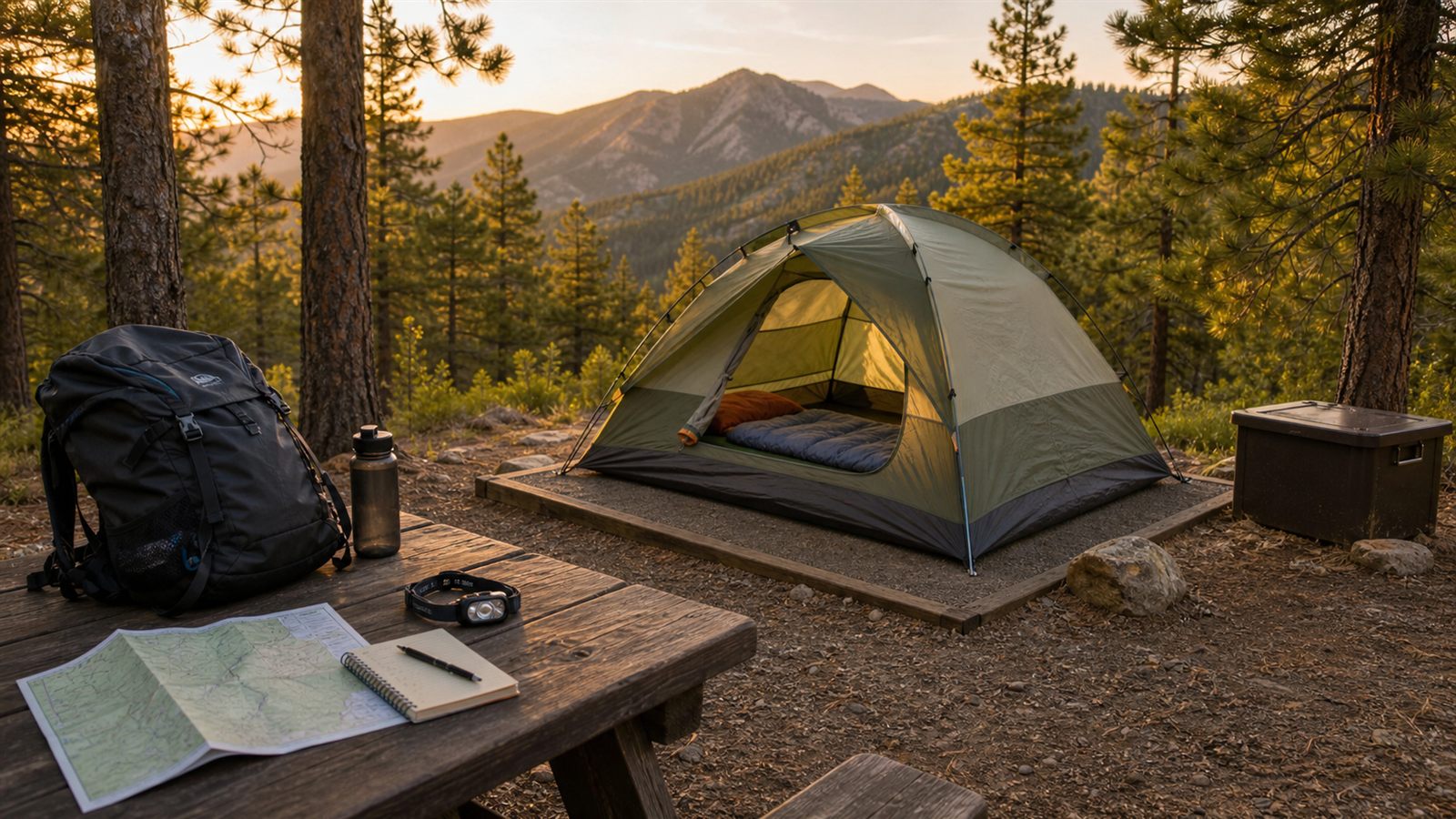
Solo camping for beginners should start with a simple goal: make the first night easy to plan, easy to monitor and easy to leave if conditions change. A low-stress first solo trip is usually not the most remote one. It is a legal campsite with known rules, a conservative weather window, a clear communication plan and a setup you can manage before dark.
This checklist is research-based and written for US campers. It does not replace current rules from a park, campground, public-land agency, weather service or emergency authority. Use it to prepare, then let the latest local information make the final decision.
The First Solo Camping Rule: Make the Trip Easy to Leave
For a first solo camping trip, choose a short overnight where the exit plan is obvious. A developed campground, staffed park campground or familiar public-land area is usually a better confidence builder than a remote backcountry site.
The National Park Service camping safety guidance is blunt about preparation: plan the visit, learn possible risks before the trip, listen to warnings from park staff, know your limits and choose equipment and supplies with good judgment. For solo campers, that means lowering complexity before adding adventure.
A beginner-friendly first solo trip usually has:
- A legal campsite with clear reservation or use rules.
- A drive or walk out that remains realistic if you feel unsafe, cold, sick or overwhelmed.
- A weather forecast that does not include thunderstorms, dangerous heat, heavy wind or cold you are not equipped to handle.
- Enough daylight to arrive, look around and set camp calmly.
- A trusted contact who knows where you are and when you plan to return.
Confidence comes from stacking simple decisions in your favor.
Solo Camping Safety Checklist Before You Leave
Use this checklist before committing to the trip. If too many items are uncertain, postpone or simplify the plan.
Trip Choice
- Pick one night, not a long first solo itinerary.
- Stay close enough to leave if the plan stops feeling manageable.
- Confirm the campsite is legal and available.
- Check the campground or land-manager page for water, restrooms, fees, fire rules, food-storage rules and reservation requirements.
- Save the address, coordinates or site number somewhere you can access offline.
Communication
- Share a written trip plan with someone who is not going with you.
- Include destination, route, campsite, vehicle description, expected return time and backup plan.
- Agree on what your contact should do if you miss the check-in.
- Charge your phone before departure and bring a power backup if the trip depends on it.
- Do not assume cell service will work at camp.
Safety Basics
- Pack the Ten Essentials categories in a way that fits your trip: navigation, sun protection, extra clothing, light, first aid, fire, repair tools, extra food, water and emergency shelter.
- Bring a physical map or other non-phone backup when navigation matters.
- Keep a headlamp accessible before sunset, with spare batteries or a charging plan.
- Carry personal medications and a first-aid kit matched to your needs.
- Pack layers and rain protection for the coldest or wettest realistic conditions.
For a broader non-solo gear foundation, pair this with Trail Gear Review’s weekend camping checklist for beginners. This article narrows the focus to camping alone.
Share a Trip Plan With a Trusted Contact
Solo camping changes the communication math. There is no camp partner to notice if you are late, sick, lost or stuck. A trip plan gives someone at home a concrete starting point.
The NPS Trip Plan guidance describes a trip plan as a written plan that can be shared with a trusted contact and can include travel details, expected return date and time, and activity details. NPS also notes that a trip plan is not a permit substitute or a guarantee of safety. It is a preparation tool.
For a first solo trip, keep the plan practical:
- Where you are sleeping, including campground, site number or route notes.
- Your vehicle make, model, color and license plate.
- Your expected arrival and return times.
- The trails, activities or side trips you might take.
- Your backup plan if the first campsite is unavailable.
- A check-in time after you return to service.
- The local agency, ranger district, campground office or emergency number your contact should use if needed.
If you change campsites or activate your backup plan, tell your trusted contact when you can. A plan only helps if it stays close to reality.
Choose and Set Up a Campsite Before Dark
Arriving early is a safety choice, not just a comfort choice. NPS campsite guidance recommends making camp before dark and learning the terrain in daylight. That matters more when you are alone because every task takes your own attention: parking, finding the site boundary, pitching shelter, locating water, checking hazards and organizing food.
Before you unload, walk the campsite. Look up for dead branches. Look down for low or sunken ground that could collect water. NPS campsite guidance flags risks such as flash flooding, lightning, wind and dead trees or branches.
Then build a simple layout:
- Put the tent on level ground, not in a low spot.
- Keep tent lines out of the path you will walk at night.
- Separate sleeping, cooking and eating areas when the site allows.
- Keep food and scented items away from the sleep area under local rules.
- Put your headlamp, shoes, water and jacket where you can reach them from the tent.
- Know the fastest path to your vehicle, restroom, water source and campground host or exit.
Do not use your first solo evening to troubleshoot a new tent for the first time. Practice the shelter at home or in a nearby outdoor space before the trip.
Build a Sleep Setup That Supports Calm, Dry Rest
The sleep system is a confidence system. A dry, warm, predictable night makes the rest of the trip feel easier.
Use the expected nighttime conditions, not just the daytime high, to decide what to bring. The National Weather Service says checking the forecast should be part of routine cold-weather preparation. Its cold-weather guidance also advises people outdoors in extreme cold to dress in layers, cover exposed skin and change into dry clothing if wet.
For a beginner solo camp, prioritize:
- A shelter you know how to pitch.
- A sleeping bag or quilt suited to the expected low.
- A sleeping pad that insulates you from the ground.
- Dry sleep clothing protected in a bag or bin.
- A warm layer you do not wear while cooking.
- A rain plan for wet gear.
- A light you can find without searching in the dark.
If the nighttime low, wind, rain or humidity is beyond what your sleep setup can realistically handle, choose another night. Confidence is easier to build when the conditions match your preparation.
Watch Weather Like It Can Change the Plan
Solo camping does not require fear, but it does reward conservative weather decisions. Check the forecast before you leave, again close to arrival, and during the trip when service is available. If your campground has a ranger, host or alert board, use it. NPS during-stay guidance tells campers to check for alerts and conditions such as wildlife sightings, severe weather, flash flooding, lightning, dead trees, rock falls and air quality.
Thunderstorms deserve a hard boundary. CDC lightning guidance says tents, picnic shelters and gazebos do not protect from lightning. Safe shelters include substantial buildings and hard-top vehicles with the windows up. CDC also advises waiting at least 30 minutes after a storm before resuming outdoor activity.
Use these go/no-go checks:
- Thunderstorms in the forecast and no reliable shelter plan: postpone.
- High wind that could affect trees, tent stability or safe driving: postpone or choose a safer site.
- Heavy rain where the site may flood or access roads may degrade: postpone.
- Cold or heat beyond your clothing, sleep setup or water plan: postpone.
- Air quality, fire restrictions or agency alerts that change the trip risk: follow the official guidance.
For planning tools, Trail Gear Review’s guide to camping apps for planning, weather and offline maps can help you think through what information to save before service gets weak.
Keep Food, Smells and Wildlife Out of the Sleep Area
Food management is safety management. NPS cooking-in-camp guidance says food storage is important for the safety of both people and wildlife, warns campers never to feed wildlife, and says food and liquid containers should not be left unattended in campgrounds.
Before the trip, check the local food-storage rule. Do not assume that a cooler, vehicle, bear box, canister or hang method is acceptable everywhere. In bear country, NPS campsite guidance says to check park regulations and keep cooking and food storage well away from the sleeping area.
At camp:
- Cook and eat away from the tent when the site layout allows.
- Keep food, trash, scented items and liquid containers secured when not in use.
- Change out of strongly food-smelling layers before sleeping if local guidance calls for it.
- Clean up crumbs and food scraps before dark.
- Never bring food into the tent to feel more comfortable.
- Never feed wildlife, even if animals seem used to people.
The point is not to make camp complicated. It is to keep the sleep area boring to animals.
Know What You Will Do If Something Goes Wrong
An emergency plan should be simple enough to remember when you are tired or stressed. NPS Outdoor Emergency Plan guidance recommends getting a map, reviewing the route, packing the Ten Essentials, carrying signaling items such as a whistle or mirror, and leaving a trip plan with a trusted contact.
For solo camping, write your first response plan before the trip:
- Stop and assess before making the problem worse.
- Use your map, GPS or landmarks to confirm where you are.
- If it is safe, retrace your route to the last known point.
- If you cannot safely retrace, call 911 if service is available.
- Share location details, visible landmarks, clothing, equipment and any medical concern.
- Stay put unless there is an immediate threat to life.
- Conserve energy, use shelter and signal with whistle, light or mirror if needed.
Do not wait until you are lost, injured or panicked to decide what your plan is. Write it down, keep it accessible and tell your trusted contact where the plan lives.
Confidence Checklist for Your First Solo Night
Before you leave home, ask these final questions. A “no” does not mean you cannot solo camp; it means this version of the trip needs adjustment.
- Do I know where I am legally sleeping?
- Have I checked current rules, weather and alerts?
- Can I arrive and set camp before dark?
- Does someone reliable have my trip plan and return time?
- Do I have a realistic communication and charging backup?
- Do I know where water, restrooms, exits and help are located?
- Is my sleep setup warm, dry and familiar enough for the forecast?
- Do I know the local food-storage rule?
- Do I have a clear plan for lightning, heavy rain, cold, heat or unsafe feelings?
- Can I leave without drama if the trip stops feeling right?
Solo camping for beginners is not about proving you can handle everything. It is about choosing a first trip that lets preparation do most of the work. Keep the plan small, follow current local guidance, make communication explicit and treat confidence as something you build one calm night at a time.