

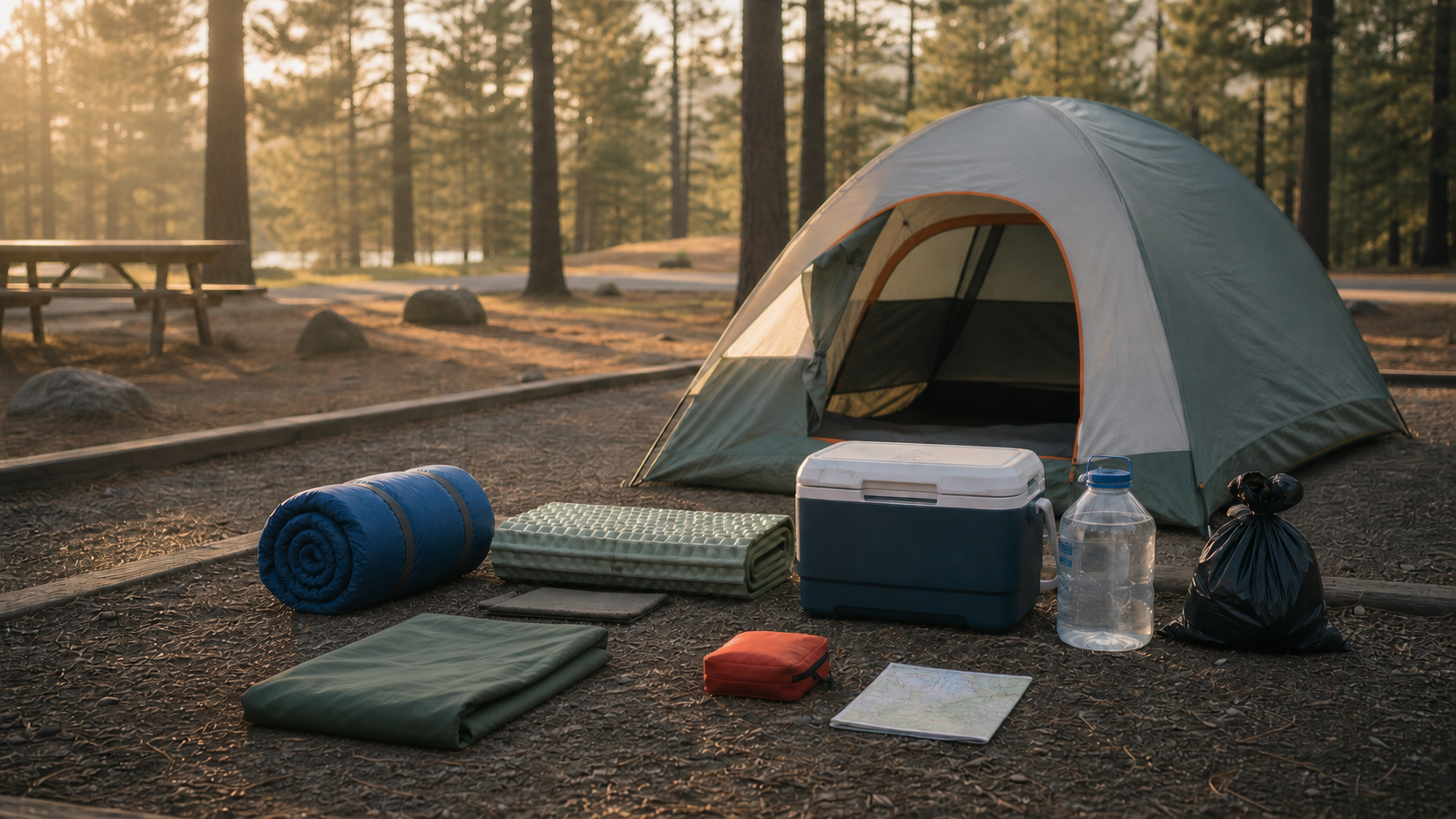
A long week in the office, home, or school can leave your system running hot. A short weekend outdoors can help, but only if you structure it around recovery instead of just activity.
This guide gives you a practical, two-day rhythm you can run with low pressure. You are not trying to optimize with perfect tactics. You are restoring baseline energy: better sleep, simpler meals, safe movement, and cleaner trip-close habits.
Why a 48-Hour Reset Works Better Than a Random Packing List
Many campers begin with too many tasks and too much urgency. A 48-hour reset works better because it gives your week with two clear phases:
- establish a safe baseline on day one,
- make one calm improvement on day two.
This reduces decision fatigue and keeps your trip aligned with recovery goals.
Pre-Trip Setup Before You Leave
Confirm Campsite Rules and Logistics First
The NPS campsite planning guidance stresses that rules, water, and amenities vary by destination. Confirm the destination-specific details before departure:
- reservation timing and check-in details,
- potable-water availability,
- fire restrictions and closure notices,
- waste and food-storage requirements, and
- quiet or animal-control rules at your site.
Set a Light Trip Plan and Share It
The NPS trip-plan approach recommends a short, actionable plan before departure. For a recovery weekend, define:
- day-one and day-two priorities,
- your fallback route if conditions change,
- a trusted contact and expected check-in points.
Day 1: Build the Recovery Baseline
Arrive With a Recovery-First Intent
- Set up shelter and water, then lighting.
- Place food and storage based on local instructions.
- Confirm phone and power backup once, then leave it stable.
- Hold day-two tasks until your baseline is ready.
Your Day-1 Core Routine
- complete camp setup calmly first,
- eat a simple meal within a stable time window,
- do one short low-effort outdoor activity,
- review campsite constraints before dark.
Day 1 Evening: Lower Stimulation Before Sleep
Keep the evening routine simple: no new tasks an hour before your target bedtime, stable lighting, and a short closure checklist for food and hydration.
If you use fuel-burning devices, CDC guidance notes a clear safety line: these devices should not be used in tents or enclosed shelters. This is a strict safety step, not a convenience step.
Day 2: Gentle Movement and Recovery Habits
Movement Without Overload
Use a short loop near camp rather than adding a hard route because this is a recovery trip, not a performance test.
- Take a simple path within clear visibility.
- Carry only essentials: water, light snack, protection, and backup light.
- Apply the NPS Ten Essentials framework for minimal walk-readiness.
Nutrition and Food Safety as Recovery Practice
Your recovery plan only works if food handling stays simple:
- store food exactly as the destination requires,
- keep perishables cold and minimal when possible,
- choose a one-lane cooking plan with little cleanup carry-over,
- prepare a backup non-refrigerated meal for weather or delay scenarios.
The USDA guidance for food safety while camping reinforces practical handling and cold-chain discipline.
Safety and Low-Impact Habits That Keep the Weekend Calm
- Follow local fire, noise, and food-storage instructions from the destination authority.
- Use the NPS camping food and cleanup guidance as the baseline for your own plan.
- Keep a simple go/no-go reset check for weather and conditions.
- End with a full waste sweep and secure all attractants.
Applying Leave No Trace principles reduces risk and removes cleanup stress at the end of the trip.
Your 48-Hour Camping Reset Checklist
- Confirm destination rules: water, fire, waste, storage.
- Share a short trip plan.
- Set a calm camp baseline before expanding activities.
- Lock a sleep boundary for day one.
- Use short, low-risk movement on day two.
- Keep food storage simple and destination compliant.
- Close with a clean site sweep and a hydration/gear reset.
Sources
- Sleep Foundation, Sleep Hygiene for general sleep-boundary framing.
- NPS Trip Plan for practical trip planning structure.
- NPS campsite planning for local rules and logistics.