

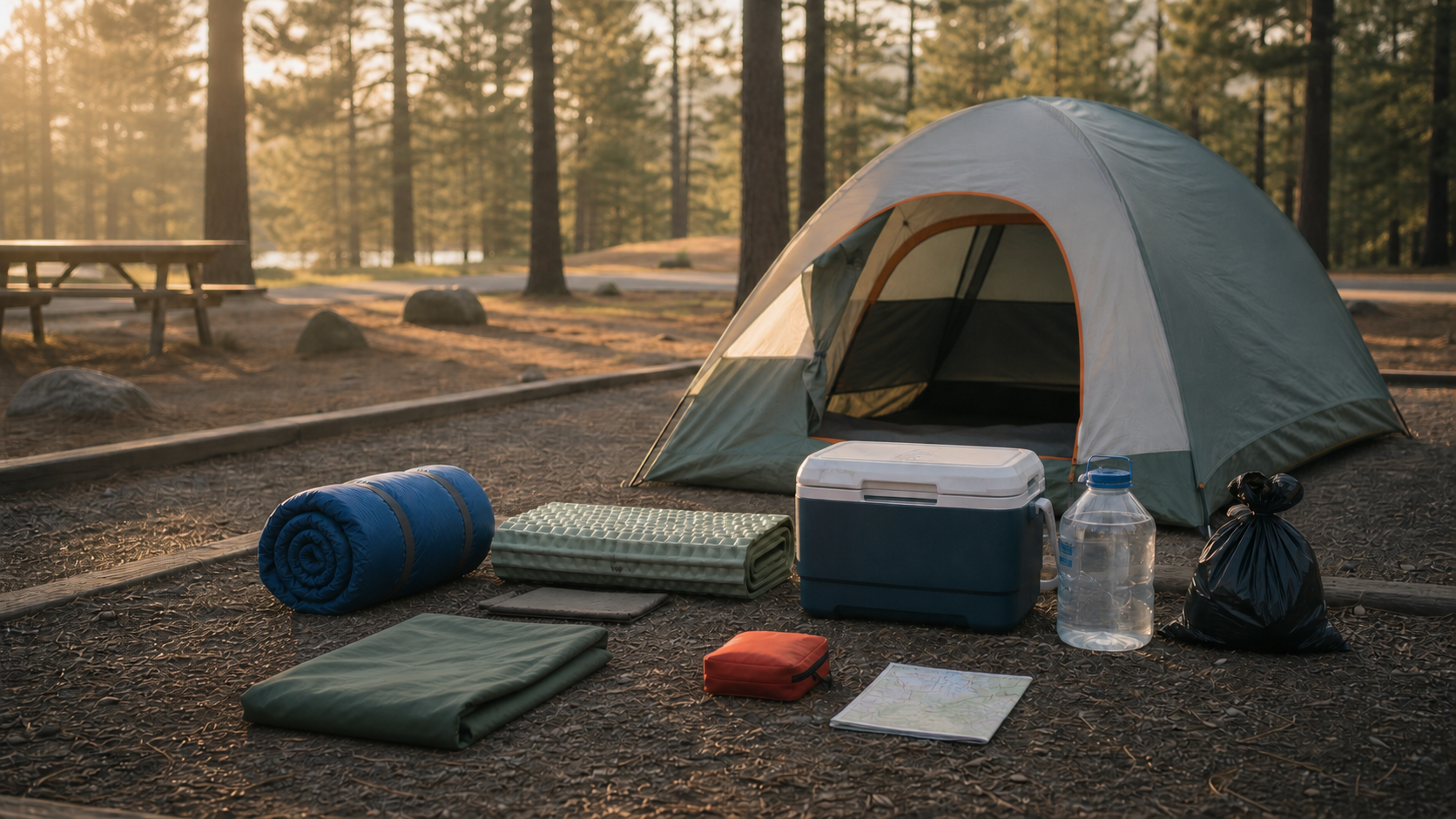
A first weekend camping trip does not need an enormous gear pile. For a two-night stay at a developed campground, focus on the basics: confirm what the site provides, pack for restful sleep and simple meals, carry safety items for time away from camp, and leave the site clean. This beginner camping checklist organizes those decisions in the order you will actually use them.
Start With the Campsite, Not the Gear Pile
Before loading the car, check the campground page or reservation details. The National Park Service (NPS) notes that campground facilities and rules vary: potable water, fire permissions, restrooms, food-storage requirements, fees and reservation systems may differ by location. A short check now prevents arriving with the wrong expectations.
Confirm Before You Leave
- Your reservation, arrival window, checkout time and site number, if assigned
- Whether potable water is available or you need to carry your full supply
- Whether campfires are permitted and whether there are current fire restrictions
- Restroom, shower and trash-service availability
- Food-storage instructions, especially in wildlife areas
- Pet rules, quiet hours, vehicle limits and any local weather or hazard alerts
For an overnight trip that includes walking trails or exploring away from your site, consider leaving a basic itinerary with someone at home. The NPS Trip Plan is designed to capture where you plan to go and when you expect to return, then be shared with a trusted contact. It is a preparation tool, not a guarantee of safety or a substitute for permits.
The Weekend Camping Checklist at a Glance
Use this master list for a typical two-night campground stay, then adjust it for season, weather, local rules, group size and planned activities.
Campsite and Sleep
- Tent, stakes, guylines and a groundsheet or footprint, if appropriate for your shelter
- Sleeping bag suited to expected nighttime conditions
- Sleeping pad for cushioning and insulation from the ground
- Pillow or compact camp pillow
- Headlamp or flashlight for each camper, plus spare batteries or a charging plan
- Camp chairs and a small table only if your site does not provide what you need
Meals and Water
- Enough drinking water, or a confirmed potable-water plan
- Cooler and ice or frozen gel packs for perishable food
- Simple meals, snacks and extra food for an unexpected delay
- Stove and fuel for outdoor use only, if permitted and needed
- Lighter or matches stored safely and used only where allowed
- Pot or pan, utensils, mug, plates or bowls and a can opener if your meals require one
- Soap or cleaning supplies permitted at your destination, dish container and trash bags
- Food-storage container or method required by that campground
Clothing and Personal Items
- Clothing layers appropriate to the forecast, including a warm layer for evening
- Rain layer and extra dry socks
- Sturdy footwear suited to your plans
- Sun protection: sunglasses, hat and sunscreen
- Toiletries, prescribed medications and personal hygiene items
- Insect repellent or other destination-specific personal protection as appropriate
Safety and Navigation
- First-aid kit matched to your group and activities
- Map, downloaded campground information or another navigation backup for planned walks
- Phone and charging method, while recognizing that service may be limited
- Emergency contact and trip-plan details for activities away from camp
- Repair basics such as tape, cord or a multi-purpose tool suitable for your equipment
Campsite Care
- Trash bags for every piece of waste
- A plan for food scraps, scented items and dirty cookware under local wildlife-storage rules
- A quick sweep plan for tent stakes, food scraps and small bits of packaging before checkout
Build a Comfortable Shelter and Sleep Setup
For a first weekend, sleep comfort matters more than adding optional camp accessories. Start with a shelter you understand how to pitch, then pair it with insulation from the ground and sleeping warmth appropriate to the expected conditions. Pitching a tent for the first time at home or in a nearby outdoor space can reveal missing stakes, unclear poles or an awkward setup before arrival.
Pack your lighting where it is reachable as soon as you arrive. A headlamp is especially useful because it keeps both hands available for pitching a tent, finding a zipper or carrying water after dark. Keep dry sleep clothing and a warm layer inside a protected bag rather than relying on everything staying dry in an open vehicle hatch or around camp.
- Shelter pieces accounted for before departure
- Sleeping pad, sleeping bag and dry nighttime layers packed together
- Light accessible before sunset, not buried at the bottom of the car
- Rain plan in place for packing wet gear separately on the drive home
Plan Simple Meals, Water and Responsible Food Storage
Keep the first camping menu uncomplicated. Meals that use a small number of ingredients reduce cleanup and make it easier to manage cold storage. For perishable items, the USDA Food Safety and Inspection Service advises keeping cold food at 40 F or below in a cooler with ice or frozen gel packs.
Food management is also wildlife management. The NPS cooking and food-storage guidance emphasizes checking local instructions, storing food and trash as required, and never feeding wildlife. Do not assume that the storage method from one campground applies to the next. Some destinations supply storage lockers; others require a specific approach.
- Confirm the local food-storage rule before selecting containers.
- Bring only meals you can safely store and prepare at camp.
- Keep trash, food scraps and scented items managed under the same local storage guidance.
- Clean your cooking area and pack all waste for the designated disposal option.
One safety boundary should be absolute: never use a fuel-burning stove, grill or charcoal inside a tent, camper or enclosed shelter. The Centers for Disease Control and Prevention warns that these items can produce carbon monoxide, an odorless and colorless gas that can cause serious illness or death.
Pack Clothing for Change, Not Just the Forecast Icon
A forecast gives you a starting point, but a weekend outside can include cool mornings, warm afternoons, rain and damp clothing. Bring adaptable layers: next-to-skin clothing, a warm insulating layer and a rain shell. Add dry socks and a dedicated change of sleep clothing so a wet afternoon does not become an uncomfortable night.
Keep destination-specific needs in mind. Sun exposure, insects, altitude, water activities or cold nights may change what belongs in your personal kit. Pack medications and essential personal items early, not as a last-minute afterthought.
- Forecast and local conditions checked shortly before departure
- Warm layer and rain layer packed even if the main forecast looks pleasant
- Dry socks and sleep clothing protected from moisture
- Sun protection and any destination-specific personal protection included
Carry Safety Items When You Leave the Campsite
A developed campground can be a comfortable home base, but a short trail walk still takes you away from the car and supplies. The NPS Ten Essentials groups outdoor preparedness into navigation, sun protection, insulation, illumination, first aid, fire, repair tools, nutrition, hydration and emergency shelter. Adapt those categories to the length, terrain and conditions of your outing.
For a short walk from camp, that may mean taking water, a snack, a map or offline route information, sun protection, an extra layer, a headlamp and a small first-aid kit instead of leaving all useful gear back at the tent. If your plan becomes longer or more remote, your preparation should expand with it.
- Tell someone in your group where you are heading and when you expect back
- Carry water and the safety items appropriate for the outing
- Check that darkness, heat, storms or local hazards do not change the plan
- Turn around or adjust the plan if conditions are no longer a good match for your preparation
Keep the Campsite Low Impact
A well-packed campsite is not only comfortable; it is easier to keep tidy and responsible. The Leave No Trace 7 Principles include planning ahead, disposing of waste properly and respecting wildlife. For a campground weekend, those ideas are wonderfully practical: control loose packaging, keep food secured as required, and make a final inspection routine part of your packing plan.
- Keep food, trash and scented items managed according to local rules
- Never feed wildlife, even if an animal appears accustomed to visitors
- Keep noise and lighting considerate of nearby campers
- Use established facilities and follow posted fire rules
- Collect small waste such as food wrappers, twist ties and tent-stake packaging before leaving
Final Ten-Minute Check Before You Leave Home
Put the last few minutes to work. Confirm your campsite rules, weather, drinking-water plan, food-storage requirements and route. Check that cooking equipment is intended for outdoor use only and that everyone knows it will never be operated in a tent or enclosed shelter. If you plan to explore away from camp, share the relevant trip details with your trusted contact.
- Reservation and campground rules saved
- Tent, sleep system and lighting packed
- Water and simple meal plan confirmed
- Cooler prepared for perishables, if needed
- Local food-storage rule understood
- Layers, rain protection and personal essentials packed
- First-aid and outing safety items packed
- Trash and cleanup supplies packed
- Trip-plan details shared for activities away from camp, as appropriate
A first weekend outdoors is easier to enjoy when your checklist protects the essentials without turning the trip into a shopping exercise. Pack carefully, follow the rules of your destination and leave your campsite ready for the next adventure.